The crest on Plate 4, Image 9 (Pl. 4. cr. 9.) is described as a demi-lady (or woman issuing from the middle), richly attired, holding in her dexter hand a tower (or castle) and in her sinister hand a palm branch (or branch of laurel).
Surnames: 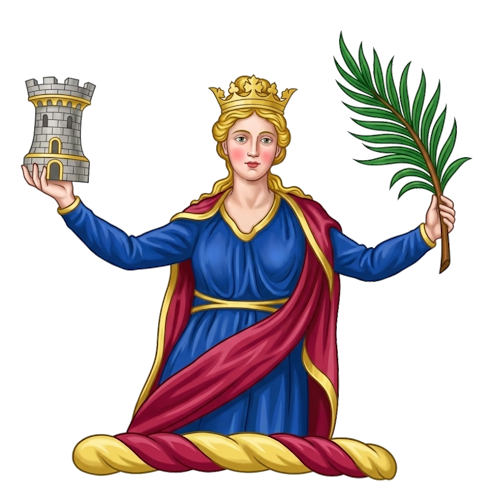
- Aickinson (England)
- Aitkenson (England)
- Baley (England)
- Balle (England)
- Baylee (England)
- Elghingstone (Scotland)
- Elphenston (Scotland)
- Elphingston (Scotland)
- Gardiner (England)
Symbolism of the Crest Demi-Lady: A female figure, often richly attired, typically personifies a specific virtue, such as Fortitude or Victory, or serves as a guardian spirit for the family line. Tower (or Castle): This is a classic emblem of safety, grandeur, solidity, and strategy, representing a stronghold of defense and protection for one’s kin. Palm Branch (or Laurel): The palm is the historic emblem of victory, justice, and triumph over adversity, while the laurel signifies honor, distinction, and peace achieved through success. Balance (for Gardiner): Represents justice, fairness, and the impartial weighing of truth.
General Symbolic Meanings The combination of a female figure holding a fortress and a symbol of victory suggests a lineage that values strength tempered with peace. It implies a family character that is defensive and enduring (the tower) while achieving triumph and distinction (the palm/laurel) through virtuous and honorable conduct rather than pure aggression. For the variation holding a balance, the symbolism shifts toward a dedication to justice, suggesting a family history involved in law or one that prizes equity above all else.