The crest on Plate 3, Image 9 (Pl. 3. cr. 9.) is described as two hands conjoined in fess, the dexter in armour and the sinister proper, supporting a branch of palm and a thistle.
Surnames: 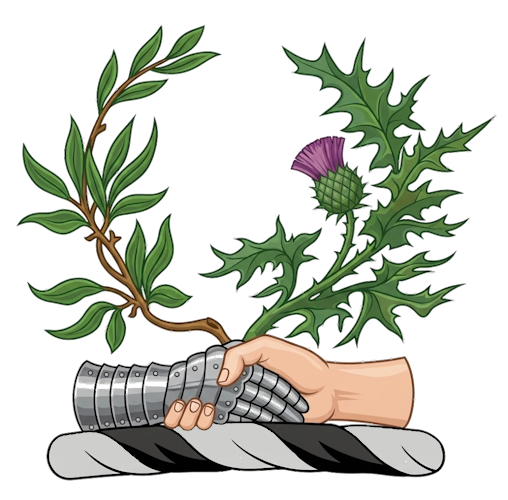
- Dobbe
- Dod (England)
- Dode (England)
- Wedderburn (England)
Symbolism of the Crest Hands Conjoined: The image of clasped hands, known as the “foi,” is a universal symbol of union, alliance, and fidelity, representing a pledge of faith between two parties. Armoured Hand vs. Naked Hand: The dexter hand in armour signifies military strength and protection, while the naked sinister hand represents civil power or peace; their union implies strength supporting peace or a powerful alliance between force and diplomacy. Thistle: A classic emblem of Scotland, representing defiance, durability, and protection, often associated with the sentiment that “no one provokes me with impunity.” Palm / Laurel: These are widely recognized symbols of victory, triumph, and lasting fame, indicating that the union or lineage has achieved success through honorable means.
General Symbolic Meanings This crest symbolizes a powerful alliance or union, likely indicating a family that maintains peace through strength. The combination of the thistle and palm suggests a victorious struggle or a heritage deeply rooted in Scottish resilience, achieving triumph through a balance of martial readiness and honorable conduct.