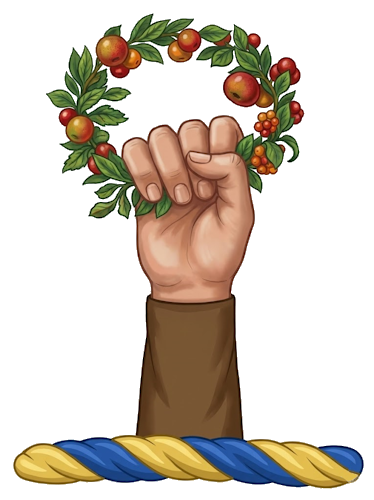
The crest on Plate 3, Image 1 (Pl. 3. cr. 1.) is described as a dexter hand (or arm) issuing from the wreath, holding a garland or wreath of laurel (or roses).
Surnames:
- Couper (Gogar)
- Cowper (Gogar)
- Creech (Edinburgh)
- Gilmour (Little Craigmiler)
- Haveland (England)
- Heriot (Scotland)
- Killegrove (England)
- Krog (England)
- Kroge (England)
- Luttrell (England)
- M’Kenzie (Balmaduthie)
- Purefoy (England)
- Ross (Balnagowan, Scotland)
- Watson (Scotland)
- Wodderspoon (Scotland)
Symbolism of the Crest Dexter Hand: The hand is a pledge of faith, sincerity, and justice; it signifies the instrument of labor and the potential for action. Garland / Wreath (Laurel): A garland, particularly of laurel, is the classic emblem of victory, triumph, and peace achieved after a struggle, often awarded in ancient times for civic or military merit. Roses: When the garland is composed of roses, it can symbolize beauty, grace, and transient joy, or a reward for merit that is both sweet and thorny (requiring effort to attain).
General Symbolic Meaning This crest embodies the spirit of achievement and reward. It suggests a lineage or individual who has earned distinction through honorable effort, whether in martial pursuits, the arts, or civic duty, resulting in a triumphant and peaceful standing.