The crest on Plate 9, Crest 12 (Pl. 9. cr. 12.) is described as the trunk or stump of an oak tree shooting forth new branches or leaves (often termed “revirescing”).
Surnames: 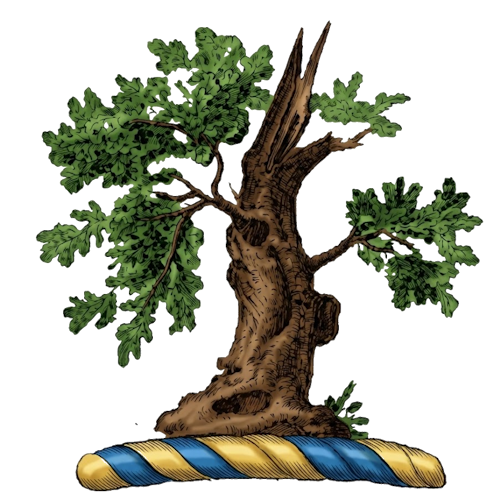
- Air (Scotland)
- Belches (Tofts)
- Belsches (Tofts)
- Belsches (Advocate)
- Belshes (Scotland)
- Biset (Scotland)
- Bisset (England)
- Bough (Scotland)
- Crosby (Home)
- Crosbie (Edinburgh)
- Dalgleish (Ancient Crest)
- Gregory (Scotland)
- Hamilton (Blanterferm)
- Lauder (Portioner of Beilhaven)
- Laurie (Plainstones)
- Lawder (Belhaven)
- Lawder (England)
- Limesey (England)
- Lowrie (Plainstones)
- Mackeuan (Muckly)
- Mackewan (Scotland)
- M’Lowe (England)
- Nairn (of Seggerden)
- Plaine (England)
- Scrogie (Commissary of Argyle, Scotland)
- Scrogie (Scotland)
- Smellet (Scotland)
- Smollet (Bonhill, Bart.)
- Taillifer (Hairecleugh)
- Trower (England)
- Wellwood (Garvock)
- Wellwood (Pitliver)
Oak Tree Stump: The trunk of the oak represents antiquity, strength, and the deep roots of an established lineage. Sprouting Branches: The fresh shoots growing from an old or cut stump symbolize regeneration, new life, and the restoration of family fortunes after a period of decline or adversity. Proper: Indicates the tree is depicted in its natural colors (brown wood and green leaves), emphasizing the vitality and natural resilience of the symbol.
The imagery of a tree stump sprouting new growth is a profound heraldic metaphor for resilience and hope. It suggests a family that, despite past hardships or the potential extinction of a main line, possesses the inherent vigor to flourish once again. It is often accompanied by mottos such as Reviresco (“I grow green again”), symbolizing endurance and the triumph of life over decay.
The crest on Plate 9, Image 11 (Pl. 9. cr. 11.) is described as a demi-griffon issuing from a tower (or variations thereof, including a mascle and an arm in armour).
Surnames: 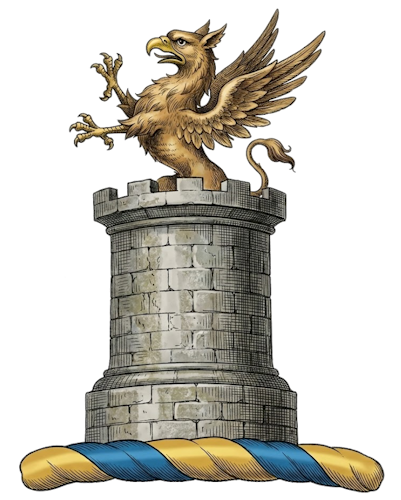
- Bylney (Norfolk)
- Connel (Ireland)
- Connell (Ireland)
- Halpin (Ireland)
- Kerdiston (England)
- Laxton (England)
- Luckin (Malden, Deverell, Essex)
- Luckin (Waltham, Essex)
- Neale (England)
- Tassie (Scotland)
- Tassie (England)
- Whorwood (England)
Symbolism Demi-Griffon: The griffon (or gryphon) is a mythical creature with the head and wings of an eagle and the body of a lion, combining the swiftness and keen vision of the former with the strength and courage of the latter; it is a classic symbol of vigilance, valour, and the guardian of treasure. Tower: The tower signifies safety, grandeur, and defense, often granted to those who have faithfully held a fortress or defended their sovereign’s territory. Mural Crown (implied in some variations): Often associated with the tower, this represents military fortitude and the capture or defense of a walled city.
General Symbolic Meaning The combination of the fortified tower and the mythical griffon suggests a lineage characterized by high vigilance and defensive strength. It implies a family history of protecting valuable assets, homes, or territories, combining the lion’s bravery on land with the eagle’s swiftness and vision, signifying a protector who is both watchful and formidable in the face of danger.
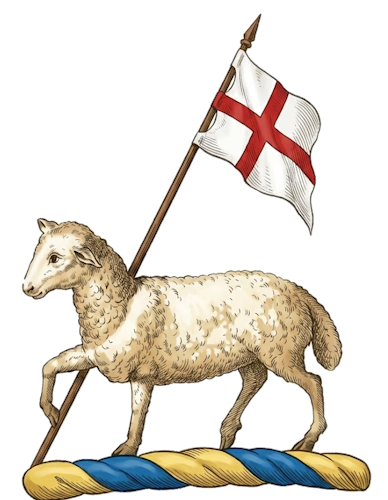
The crest on Plate 9, Crest 10 (Pl. 9. cr. 10.) is described as a Holy Lamb (or Paschal Lamb), often regardant (looking back), supporting or carrying a flag (banner or standard) over the dexter shoulder, frequently charged with a cross (St. George’s or St. Andrew’s).
Surnames:
- Beawfice (England)
- Boggie (England)
- Bogie (England)
- Crosby (Scotland)
- Crossby (Scotland)
- Davie (Scotland)
- Dewar (Alnwick)
- Dowdall (Ireland)
- Hickey (Ireland)
- Lamb (Scotland)
- Langholme (England)
- Lluellin (Hertfordshire)
- Malmains (England)
- Mills (London)
- Parry (England)
- Pascol (England)
- Richards (Rew, Devonshire)
- Rowe (Lamerton, Devonshire)
- Stopford (Ireland)
- Wastfield (Wiltshire)
- Wastfield (Somersetshire)
- Wastfield (London)
Symbolism of the Crest
Paschal Lamb / Holy Lamb (Agnus Dei): The lamb is the pre-eminent symbol of innocence, gentleness, purity, and patience under suffering. When depicted as the “Paschal Lamb” or “Agnus Dei,” carrying a flag or banner (often charged with a cross), it signifies faith, victory over death, and the triumph of the spirit. Flag/Banner: The banner represents spiritual warfare and the rallying point of faith, indicating that the bearer is a soldier of Christ or holds deep religious convictions. Halo (Glory): Often associated with this figure, the halo (or glory) emphasizes sanctity and divine favor.
General Symbolic Meaning
The combination of the lamb and the military standard suggests a duality of nature: a gentle, peace-loving disposition paired with a steadfast readiness to defend one’s faith or principles. It implies a lineage that values purity of heart but possesses the courage to stand firm for a cause.
The crest on Plate 9, Image 9 (Pl. 9. cr. 9.) is described primarily as a spur (often with leathers and buckle).
Surnames: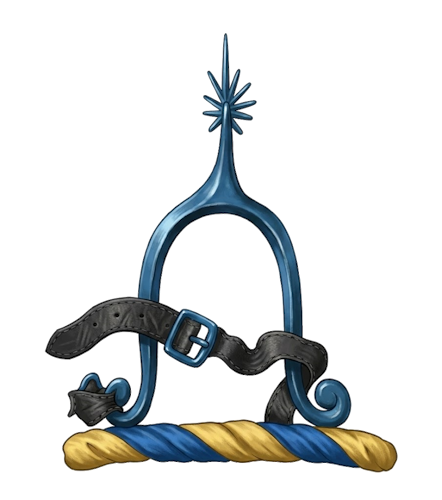
- Abbis (Norfolk)
- Abbiss
- Abis (Norfolk)
- Abys (Derbyshire)
- Harrower (Inzievar)
- Harrower (England)
- Johnston (Corehead, or Lochhouse)
- Wollacombe Of Devonshire (England)
Symbolism
Spur: The spur is a symbol of readiness, preparedness for active service, and knighthood (chivalry); it implies a nature that is quick to action (“spurring on”) and eager to press forward in honorable pursuits.
General Symbolic Meanings
The dominant imagery of the spur in this grouping suggests a lineage characterized by alertness and a readiness to engage in duty or battle at a moment’s notice. It evokes the spirit of the chevalier—mounted, equipped, and prepared for the “spur of the moment.”
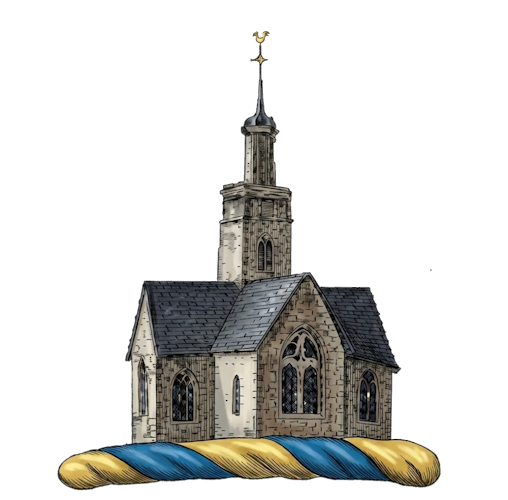
The crest on Plate 9, Image 8 (Pl. 9. cr. 8.) is described as a church, proper, often depicting a spire or steeple.
Surnames:
- Carpenter (England)
- Depham (England)
- Donelly (Ireland)
- Monkhouse (England)
- Wandesford (England)
- Wandesford, Earl of Wandesford (Ireland)
Symbolism
Church / Cathedral: This figure is a direct representation of the Christian faith, religious devotion, and the church as an institution. It often signifies an ancestor who was a benefactor to the church, perhaps having built or endowed one, or who held a significant ecclesiastical office. Spire / Steeple: The verticality of the spire represents heavenly aspirations, pointing upwards towards the divine, and symbolizes a connection between the earthly and the spiritual realms.
General Symbolic Meanings
The presence of a church or cathedral in a crest implies a lineage deeply rooted in piety and religious conviction. Beyond personal faith, it suggests the virtues of sanctuary and protection, indicating a family that values moral fortitude, spiritual guidance, and perhaps a historical role as protectors or patrons of their local religious communities.
The crest on Plate 9, Image 7 (Pl. 9. cr. 7.) is described as 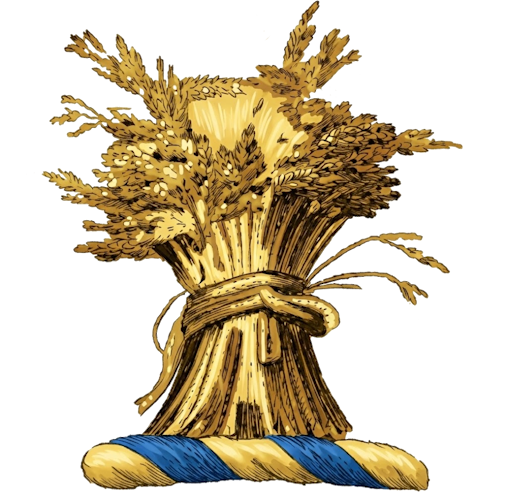
Surnames:
- Alvas (Scotland)
- Alves (Scotland)
- Aust (England)
- Barney (Norfolk)
- Barns (Glasgow)
- Baron (Bradwell, Essex)
- Baron (Skirnby, Essex)
- Baskerville (Herefordshire)
- Berney (Norfolk)
- Blair (Lethenty)
- Blair (Scotland)
- Blaquiere (England)
- Blaquire (Ireland)
- Bouling (England)
- Burket (England)
- Burkett (England)
- Catcher (England)
- Cheap (Mawhill)
- Cheap (Rossie)
- Cheap (Wellfield)
- Cheap (Pusk)
- Crawford (Cloverhill)
- Cumine (Scotland)
- Cuming (Coulter)
- Cummin (Scotland)
- Darby (Suffolk)
- Dolman (Spaw, Berkshire)
- Donald (Conheath)
- Donaldson (Scotland)
- Ducket (London)
- Ducket (Wiltshire)
- Ellis (England)
- Falknor (England)
- Ferrier (Edinburgh)
- Foller (Northiam, England)
- Folvill (Cheshire)
- Fovell (Cheshire)
- Girle (England)
- Goldie (Craigmure)
- Goldie (Scotland)
- Golding (Suffolk)
- Golding (Essex)
- Goudie (Scotland)
- Gouldie (Scotland)
- Gregorie (Lenton, Nottinghamshire)
- Grenvile (Stow, Buckinghamshire)
- Grenvile (Watton, Underwood, Buckinghamshire)
- Grenville (Lord Grenville)
- Grenville (Lord Glastonbury)
- Gwatkin (England)
- Hesketh (Rufford, Bart. Lancashire)
- Hesketh (England)
- Heskett (England)
- Hiders (England)
- James (Kent)
- James (Essex)
- Kelso (Kelsoland)
- Lawson (Cairnmuir)
- Leke (England)
- M’Laws (Garden)
- Maltby (Maltby, Cleveland, Yorkshire)
- Merefield (London)
- Michael (England)
- Miln (England)
- Milnes (Scotland)
- Modyford (Middlesex)
- Oatly (England)
- Ottley (Pichford, Shropshire)
- Paul (Norfolk)
- Paxton (Scotland)
- Peterborough (England)
- Platt (England)
- Randoll (England)
- Reath (Edmiston, Scotland)
- Reede (England)
- Reid (Ireland) [Sheaf of Rye]
- Roby (England)
- Routledge (England)
- Rowan (Scotland)
- Rowand (Bellyhouston, Ireland)
- Scambler (Kichling, Norfolk)
- Sicklemore (Ipswich, Suffolk)
- Skeen (Dyce, Scotland)
- Spilsbury (England)
- Spurwaye (Dartmouth, Devonshire)
- Spyer (Oxford)
- Spyre (England)
- Stevenson (Cumberland)
- Stevynson (Lincolnshire)
- Stevynson (Weston, Derbyshire)
- Temple (Marquis, Buckingham)
- Tippet (England)
- Vallance (Scotland)
- Vanderplank (England)
- Warnford (Stanbridge, Hampshire)
- Waruford (Venhampton, Wiltshire)
- Watur (England)
- Wauchope (Niddrie, Bart. Scotland)
- Wauchope (Elmiston, Scotland)
- Whitefoord (Scotland)
- Whitworth (Adbaston, Stafford)
- Widnell (England)
- Winton (Scotland)
- Youl (Scotland)
Symbolism of the Crest Garb (Wheat Sheaf): The Garb is a heraldic term for a sheaf of grain, usually wheat, though sometimes oats or rye. It is a symbol of plenty, abundance, and a bountiful harvest. It signifies the rewards of patient labor, the fertility of the land, and the sustenance of life. The binding around the sheaf represents unity and the gathering together of resources or family strength. In specific instances, like the Baskerville family, it appears as a sheaf of rosemary, symbolizing remembrance.
General Symbolic Meaning The use of the Garb in a crest typically points to a family with historical ties to the land, agriculture, or land ownership. It stands as a peaceful emblem, contrasting with the weapons and predatory animals often found in heraldry. It suggests a lineage that values industry, cultivation, and the prosperity that comes from diligent effort. It is an optimistic symbol, often associated with mottos regarding “increasing” or “flourishing,” representing a hope for the continued growth and stability of the family line.
The crest on Plate 9, Image 6 (Pl. 9. cr. 6.) is described as a dolphin naiant (swimming) or embowed (curved).
Surnames: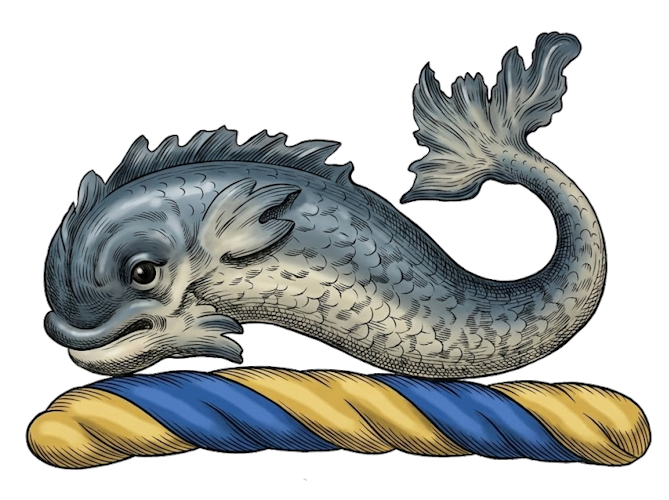
- Arnold (Cromer, Kent)
- Arnold (Ballisford, Suffolk)
- Bertwhistle (England)
- Brown (Dolphington)
- Brown (Dantzic)
- Brown (Angusshire)
- Byrtwysell (Amcotthall, Lancashire)
- Carmynow (London)
- Carmynow (Cornwall)
- Carmenow (Devonshire)
- Carminow (Tretongallon, Cornwall)
- Coulson (England)
- Coulston (England)
- Courtenay (Viscount Courtenay, England)
- Courtney (Powderham, Devonshire)
- Courtney
- Delves (England)
- Durham (Calderwood, Largo and Polton)
- Durham (Ardownie)
- Fitz Simon
- Godolphin (Devonshire)
- Godolphin (Treveveruth, Cornwall)
- Godolphin (Lord Godolphin)
- Grierson (England)
- Guthrie (Merchant, Dantzic)
- Gwynne (England)
- Harfett (Kent)
- Harflete (Kent)
- Holines (Ireland)
- James (England)
- Keay (Scotland, Writer)
- Kennedy (Earl of Cassilis)
- Kennedy (Garvin Mains)
- Mackmaure (England)
- Mallam (England)
- Monypenny (Scotland)
- Nedham (of Wimely, Hertfordshire) [
- Nutter (England)
- Orme (Northamptonshire)
- Raitt (England)
- Reardon (Ireland)
- Remnant (of Billericay, England)
- Rimmer (England)
- Ryton (England)
- Sargant (of Dynton, Buckinghamshire)
- Septuans (Kent)
- Sergeant (of Dynton, Buckinghamshire)
- Shone (England)
- Simmons (England)
- Solay (England)
- Soley (England)
- Symmonds (of Norfolk, England)
- Weyland (England)
- Wynne (of Lees-Wood, Flintshire, Baronet, England)
- Young (Scotland)
Dolphin: In heraldry, the dolphin is known as the “King of Fish” and is a symbol of charity, affection, and social love. It is often associated with the idea of salvation and resurrection in Christian symbolism, as well as swiftness, diligence, and protection. When depicted as naiant (swimming), it represents readiness and activity; when embowed (curved), it emphasizes grace and agility. The dolphin was historically viewed as a friend to man, guiding ships to safety, which underscores its meaning of guidance and guardianship.
General Symbolic Meaning: The dolphin crest suggests a lineage that values benevolence, swift action in aid of others, and a strong moral compass. It implies a family history connected to the sea or one that prides itself on guiding and protecting others through difficulties.
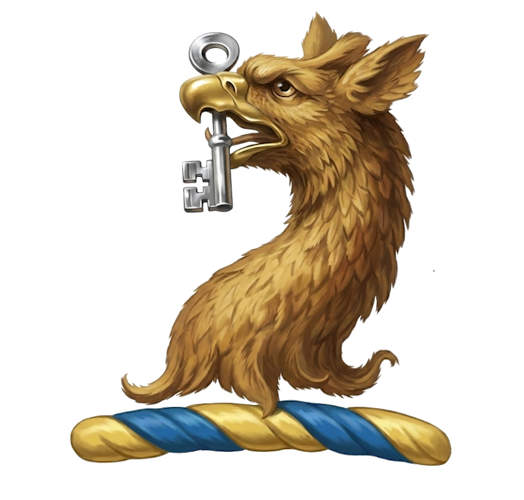
The crest on Plate 9, Image 5 (Pl. 9. cr. 5.) is primarily described as a griffon’s head erased, holding a key in its beak.
Surnames:
- Channsy (England)
- Chansey (England)
- Hillarie (England)
- Kay (Dalton, Yorkshire)
- Kay (Heath, Yorkshire)
- Kay (Millshaw)
- Key (Scotland)
- Waterman (England)
Symbolism of the Crest Griffon (or Griffin): A mythical creature combining the head, wings, and talons of an eagle with the body of a lion, the griffon symbolizes vigilance, courage, and strength. It is traditionally known as a fierce guardian of treasure. Key: This emblem represents guardianship, dominion, and knowledge, often suggesting a position of trust, authority, or stewardship (such as a keeper of a fortress). Erased: When a head is “erased” (appearing torn off with jagged edges rather than cut cleanly), it signifies strength and violent action in defense of one’s heritage.
General Symbolic Meanings The combination of the Griffon—a creature renowned for its watchful nature and power—with a Key suggests a lineage entrusted with significant responsibilities. It symbolizes a safe-keeper, one who guards secrets, property, or authority with unwavering fierceness and reliability, blending the eagle’s vision with the lion’s bravery to protect what is held dear.
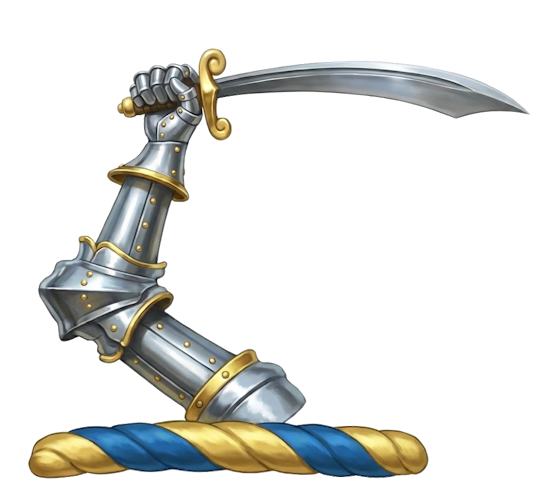
The crest on Plate 9, Image 4 (Pl. 9. cr. 4.) is described as an arm in armour embowed, brandishing a scymitar, cutlass, or sword.
surnames:
- Abel (Essex)
- Amond (Scotland)
- Athil (England)
- Basnett (England)
- Bell (Scotland)
- Birrel (England)
- Bloor (England)
- Bloore (England)
- Buck (Hampshire)
- Bucke (Kent)
- Chambers (England)
- Chiney (England)
- Crewker (England)
- Cripps (England)
- Crips (England)
- Dickson (Kilbuckie)
- Donald (Scotland)
- Donnelly (Ireland)
- Elyard (England)
- French (Lord Ashtown)
- Graham (Westmoreland)
- Hardie (Scotland)
- Henry (Derby)
- Kennedy (Ireland)
- Kirke (Essex)
- Leslie (Earl of Leven and Melville)
- Linesley (England)
- M’Coul (Scotland)
- M’Cubbin (Scotland)
- M’Gregor (Scotland)
- M’Hardie (Scotland)
- M’Kellor (Scotland)
- Macdougall (Lorn)
- Millward (England)
- Oakeley (Shrewsbury)
- Oakley (Shrewsbury)
- Rawlins (England)
- Rice (Ireland)
- St Amond (Scotland)
- Stratford (Earl of Aldborough, Ireland)
- Stratford (Coventry, England)
- Tregose (England)
- Trench (Lord Ashton, Ireland)
- Tuffnall (Middlesex)
- Wall (Ireland)
- Wingate (Scotland)
Symbolism of the Crest
Arm in Armour: An arm clad in armor signifies a person with qualities of leadership and protection, one who is prepared for battle and maintains a state of readiness. It represents strength, protection, and military prowess. Embowed: The bent position of the arm suggests action and the moment of striking. Scimitar / Cutlass / Sabre: These curved swords often denote military honor, particularly in Eastern campaigns (Crusades) or naval engagements (cutlass). They symbolize the execution of justice and the bravery required to defend one’s kin and country.
General Meaning
Together, the armored arm and the curved sword suggest a family history rooted in martial prowess and defense. It implies an ancestor who was a “man of action,” potentially involved in the Crusades or naval defense, possessing the strength to protect their own. The inclusion of “church and spire” for the Donnelly surname (listed under the same plate number) typically symbolizes religious faith, sanctuary, and spiritual elevation, standing as a stark contrast to the martial nature of the sword crests.
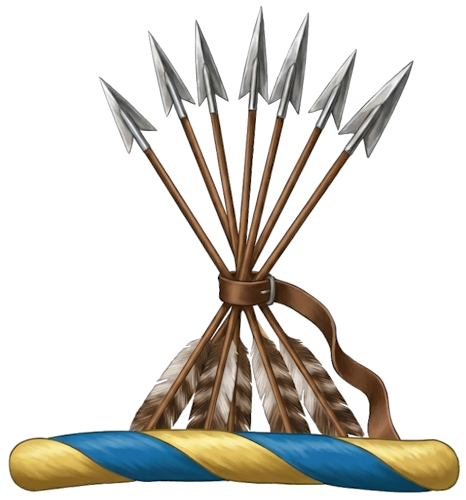
The crest on Plate 9, Image 3 (Pl. 9. cr. 3.) is described as seven arrows, typically arranged with six in saltier and one in pale, or bound together as a sheaf or bundle.
Surnames:
- Bygol (England)
- Cawdor (England)
- Finney (England)
- Forbes (Ballogie)
- Hamlin (England)
- Herbot (England)
- Ruddiman (Scotland)
- Thursby (England)
Symbolism
Arrows: Arrows are traditional symbols of martial readiness, swiftness, and penetration. When depicted in a Sheaf or Bundle, they strongly signify strength through unity and preparedness for battle, drawing upon the ancient concept that while a single arrow is easily broken, a bundle is unbreakable. Seven: The specific number seven often denotes completeness or perfection. Saltier: The arrangement in saltier (crossed diagonally) indicates protection and defense from all sides.
General Symbolic Meanings
The imagery of the sheaf of arrows suggests a family or lineage that values military preparedness and collective strength. It implies that the bearer stands ready to defend their honor and kin, relying on the combined power of unity rather than solitary effort to overcome adversity.