The crest on Plate 8, Crest 12 (Pl. 8. cr. 12.) is described as a bugle-horn (or hunting horn), usually stringed and garnished.
Surnames: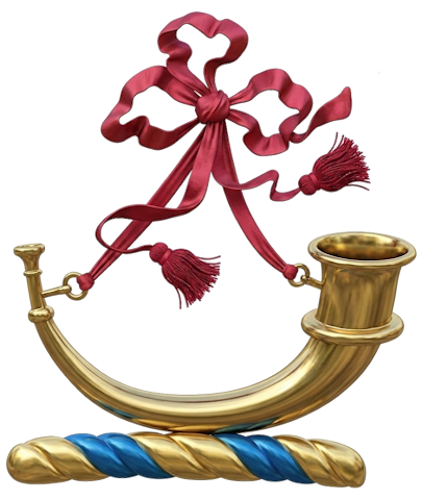
- Agard (Lancashire)
- Bagshaw (South Okenden, Essex)
- Bilson (Hampshire)
- Curl (Scotland)
- Done (England)
- Duncan (Mary-le-bone, Bart.)
- Forrester (Corstorphin)
- Goatham (England)
- Horn (Scotland)
- Horne (Westerhall)
- Hunt (Aston, Derbyshire)
- Hunter (Polmood)
- Hunter (Blackness)
- Hunter (Balskelly)
- Logan (Buncastle)
- Lothian (Edinburgh)
- Pierie (Scotland)
- Powrie (Of Woodcocksholme, Scotland)
- Pourie (Of Woodcocksholm, Linlithgowshire, Scotland)
- Povey (England)
- Purie (Of Woodcocksholm, Linlithgowshire, Scotland)
- Sclater (England)
- Waith (England)
- Wayte (Of Southampton, England)
- Whetstone (England)
Symbolism of the Crest
Bugle Horn (or Hunting Horn): The horn is a classic symbol of the chase and high pursuits, indicating a person of spirit who enjoys noble sport. Historically, it also possesses a martial significance, representing the call to rally troops for battle or the authority to summon followers to action. When depicted “stringed,” it suggests readiness for use.
General Symbolic Meaning
The image of the horn suggests a lineage connected to the ancient forests and the rights of the hunt, which were often privileges of high standing. It implies a family character defined by alertness, a readiness to gather for a common cause, and a connection to the outdoors, whether for provision or protection.
The crest on Plate 8, Image 11 (Pl. 8. cr. 11.) is described as a sand glass (or hour-glass), typically depicted in proper colors or specified tinctures such as gules (red).
Surnames Associated with this Crest: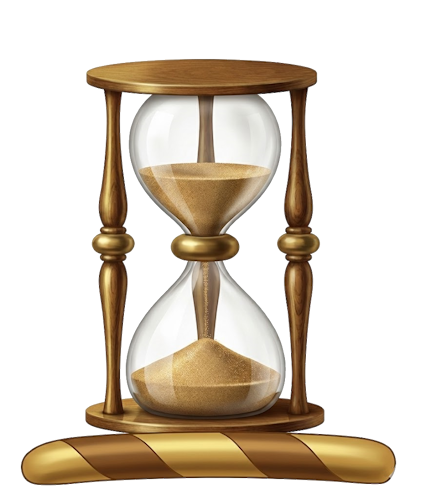
- Acheson (England)
- Benley (England) [A sand glass, gules]
- Bensly (England) [A sand glass, gules]
- Boag (Scotland)
- Bog (Scotland)
- Bogg (Scotland)
- Boog (Scotland)
- Ekinton [A sand-glass, gules]
- Forbes (Eight) [Motto: Fugit hora]
- Houston (That Ilk)
- Woodstork (England)
Symbolism
Sand Glass / Hourglass: The sand glass is a classic memento mori symbol, representing the fleeting nature of time and the inevitability of mortality. It serves as a persistent reminder to use one’s time on earth wisely, virtuously, and industriously. In some contexts, it can also signify patience, the passage of time revealing truth, or the cyclical nature of life.
General Symbolic Meaning
The presence of the sand glass suggests a family value placed on prudence, the careful management of time, and a philosophical awareness of life’s transience. It implies an ancestor known for their punctuality, vigilance, or a contemplative nature regarding the span of human life, often reinforced by mottos such as “Fugit hora” (The hour flies).
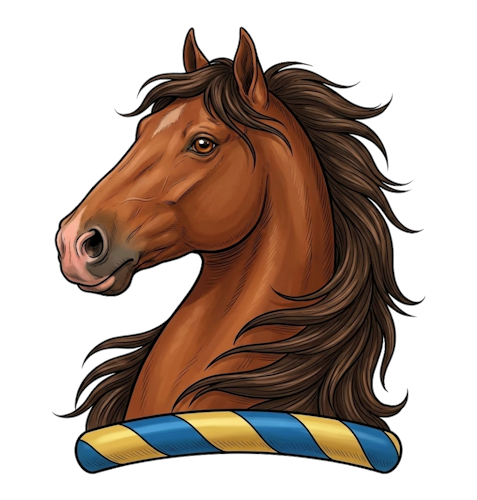
The crest on Plate 8, Image 10 (Pl. 8. cr. 10.) is described as a horse’s (or nag’s) head, typically couped or erased.
Surnames:
- Basset (Cornwall)
- Breres (Lancashire)
- Colt (Suffolk)
- Davies (Kilkenny)
- Deacon (England)
- De Courcy (Ireland)
- Dunbar (Scotland)
- Earle (Scotland)
- Fletcher (Cumberland)
- Gale (Dorsetshire)
- Gallay (Somersetshire)
- Galle (Dorsetshire)
- Galley (Somersetshire)
- Gallie (Scotland)
- Grady (Ireland)
- Greening (England)
- Hamilton (Scotland)
- Handby (England)
- Hewgell (England)
- Hoord (Shropshire)
- Horseburgh (Scotland)
- Horsefall (Yorkshire)
- Mallory (Yorkshire)
- Mallory (Northamptonshire)
- Monton (England)
- Ostle (England)
- Ostler
- Parker (England)
- Partridge (Suffolk)
- Percivall (Hampshire)
- Petley (England)
- Prescop (England)
- Prideaulx (England)
- Rotland (Surrey)
- Roushland (Surrey)
- Rutherford (Scotland)
- Rutland (Surrey)
- Stead (Scotland)
- Steerr (England)
- Tait (Scotland)
- Veist (Scotland)
- Weddell (Scotland)
- Yate (England)
Horse / Nag: The horse is a universal symbol of readiness for action, speed, intellect, and virility. It represents a willingness to serve one’s king and country with agility and strength. Head (Couped or Erased): Displaying the head alone concentrates the symbolism on the intellect and spirit of the animal. Stag / Hind (Variations): In the instances where this crest appears as a stag or hind (e.g., Breres, Handby), it symbolizes peace, harmony, and a person who will not fight unless provoked.
This crest generally signifies a lineage characterized by readiness, loyalty, and spirited action. The primary image of the horse suggests ancestors who may have been involved in cavalry service or were noted for their dispatch and energy in affairs. The variations including the stag suggest a peaceful nature that is nevertheless ready to defend its ground, while the imagery of trampling a serpent suggests a moral victory over adversity.
The crest on Plate 8, Crest 9 (Pl. 8. cr. 9.) is described primarily as a broken globe, surmounted by a rainbow, proper.
Surnames: 
- Hope (Balcomy)
- Hope (Craighall)
- Hope (Craigiehall)
- Hope (Earl of Hopeton)
- Hope (Granton)
- Hope (Hopeton)
- Hope (Kerse)
- Hope (Rankeillor)
Symbolism of the Crest
Broken Globe / Rainbow: The Rainbow is a biblical and universal symbol of hope, reconciliation, and the promise of better times following a storm. The Broken Globe (or World) represents the fragility of earthly existence, worldly ruin, or the fracturing of material things. When combined, as seen in the Hope family heraldry, they visualize the motto often associated with them: At spes infracta (“But hope is unbroken”). This signifies that even when the world falls apart or amidst earthly ruin, hope remains intact and triumphant.
General Symbolic Meanings: This crest represents a profound philosophical and spiritual resilience. It suggests a lineage that values optimism and fortitude in the face of adversity. Rather than relying on physical weapons or aggressive beasts, this imagery points toward a strength of character that endures through disaster, finding promise and beauty (the rainbow) even above a fractured world.
The crest on Plate 8, Image 8 (Pl. 8. cr. 8.) is described generally as a lion’s head erased resting upon a chapeau (or cap of maintenance).
Surnames Associated with this Crest: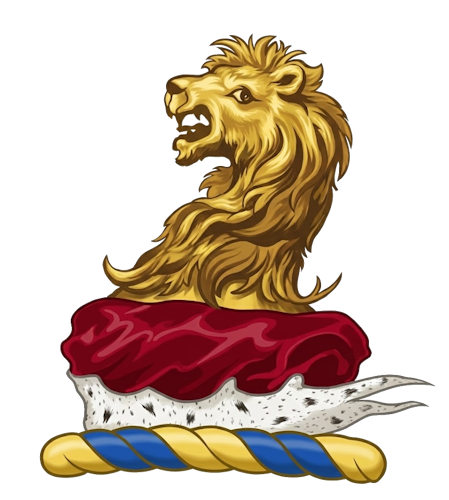
- Atfoe (England)
- Atsoe (England)
- Bec (England)
- Canton (England)
- Colbeck (Bedfordshire)
- Hamer (England)
- Henry (England)
- Hubert (Sunbery, Middlesex)
- Sheriden (England)
- Wren (England)
Symbolism of the Crest
Lion’s Head: The lion is the king of beasts, universally symbolizing undying courage, strength, and valor; when shown Erased (with jagged edges at the neck as if torn), it specifically denotes fierce strength and implies that the bearer is a powerful part of a greater noble whole. The Chapeau, also known as a Cap of Maintenance or Cap of Dignity (typically red velvet lined with ermine), signifies high dignity, authority, and feudal rank, suggesting the family held a position of importance or support to the crown. Ermine represents royalty and high nobility, while Or (gold) signifies generosity and elevation of mind.
General Symbolic Meaning
The combination of the lion’s head resting upon the cap of maintenance suggests a lineage distinguished by authoritative leadership and martial prowess. It implies a family history rooted in the upholding of rights and dignities, perhaps in a magisterial or military capacity, indicating a readiness to maintain one’s high status and honor with courage and fortitude.
The crest on Plate 8, Image 7 (Pl. 8. cr. 7.) is described as a demi-lion rampant.
Surnames: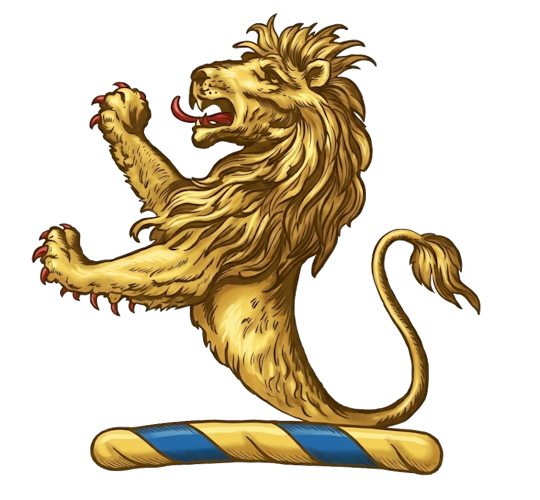
- Agar (Earl of Normanton)
- Agar (Lord Callan, Ireland)
- Agar (Lord Clifden, Ireland)
- Anscell (Barford, Bedfordshire)
- Anstrell (Barford, Bedfordshire)
- Ayloffe (Braxted Magna, Essex)
- Ayloffe (Framfield, Sussex)
- Ayloffe (England)
- Barnes (England)
- Basket (England)
- Baskett (England)
- Black (Scotland)
- Bladwell (Suffolk)
- Bladwell (Norfolk)
- Blodwell (Suffolk)
- Blouyle (Suffolk)
- Braid (England)
- Braid (Scotland)
- Brasier (Londonderry)
- Braytoft (Lincolnshire)
- Breck
- Breeck (England)
- Bulimore (England)
- Byrde (Lincolnshire)
- Cade (Derbyshire)
- Capon (England)
- Clarke (England)
- Cookson (England)
- Corrie (Scotland)
- Cosins (Charleyhall, Leicestershire)
- Cosins (Leicestershire)
- Coulthand (Scotley, Cumberland)
- Cromer (England, Bart.)
- Cruice (England)
- Cruise (England)
- Dales (England)
- Dalingrugge (England)
- Dalles
- Davidge (Somersetshire)
- Dickinson (Cleypole, Lincolnshire)
- Dickinson (Yorkshire)
- Dickinson (Bradley, Staffordshire)
- Diconson (Yorkshire)
- Diconson (Staffordshire)
- Diconson (Lincolnshire)
- Diss (England)
- Dixon (Wallington, Berkshire)
- Dolton (England)
- Drummond
- Duncombe (Scotland)
- Eam (London)
- Eam (Berkshire)
- Emes (Berkshire)
- Emes (London)
- Emme (London)
- Emme (Berkshire)
- Ewan (Scotland)
- Fife (Scotland)
- Fiffe (Scotland)
- Freeman (England)
- Freeman (Higham Ferrers, Northamptonshire)
- Freeman (England)
- Freman (England)
- Froyle (England)
- Fury (England)
- Fyfe (Scotland)
- Fyffe (Dron)
- Gaine (England)
- Geridot
- Glasse (England)
- Gold (Wiltshire)
- Goldesbrough (Lincoln’s Inn)
- Goold (Ireland)
- Gordon (Earl of Aboyne)
- Grace (England)
- Grady (England)
- Grant (London)
- Grant (Crundall, Hampshire)
- Hacklet (London)
- Hare (Norfolk)
- Hare (Lord Ennismore, Ireland)
- Herin (That Ilk)
- Heron (That Ilk)
- Hindmarsh (Scotland)
- Hoberd (England)
- Hobert (England)
- Hyatt (England)
- Inglis (Manner and Mannerhead)
- Inglis (Stewart Boone)
- Inglis (W. S. Edinburgh)
- Jevers (England)
- Jolin (England)
- Joy (England)
- Kedmarston (England)
- Kempson (Ardens, Grafton, Warwickshire)
- Kempson (Staffordshire)
- Lacy (England)
- Lacy (Stamford, Lincolnshire)
- Layton (Scotland)
- Lewins (England)
- Logan (Ireland)
- Lomelyng (England)
- Lukin (Lincolnshire)
- M’Candlish (England)
- Macduff (Thane of Fife)
- Macfie (Scotland)
- M’Kenzie (Scotland)
- M’Leish (Scotland)
- M’Phie (Scotland)
- Maddison (England)
- Martyre (England)
- Menet (England)
- Moncrieff (Bart. of That Ilk)
- Moncrieff (Wellwood, Tullibole)
- Mores (Lord Frankfort)
- Morres (England)
- Moubray (Of Barnbougle)
- Mowatt (England)
- Newlands (Scotland)
- Nichol (Scotland)
- Nickelson (Scotland)
- Nicol (England)
- Nicol (Scotland)
- Nicolson (Bart. of That Ilk)
- Noland (Ireland)
- Northwood (England)
- Nowland (Ireland)
- Ogilvie (Of Innercarity, Bart.)
- Partridge (England)
- Passingham (England)
- Peace (England)
- Peard (England)
- Pearmain Pears (England)
- Percivall (Hampshire)
- Percivall (England)
- Picken (Scotland)
- Picton (Cheshire)
- Picton (Wyvill Court, Berkshire)
- Pomeroy (Ireland)
- Pope (England)
- Praed (England)
- Priddle (England)
- Priestley (England)
- Primerose (Leith, Scotland)
- Prouse (England)
- Ravensholme (England)
- Repley (Chertsey, Surrey)
- Ridout (England)
- Rock (England)
- Rowlatt (England)
- Rumbold (Woodhall, Hertfordshire)
- Scot (Rossie, Scotland)
- Scot (Logie, Scotland)
- Sebright (England)
- Selwyn (Essex)
- Selwyn (Treston, Sussex)
- Selwyn (Beckington)
- Seys (Boverton, Glamorganshire)
- Shaw (Scotland)
- Stainsbury (England)
- Stewart (Bute, Bart. Scotland)
- Stewart (Tillycoultry, Bart. Scotland)
- Stewart (Dalguise, Scotland)
- Stewart (Earl of Bute, Scotland)
- Stone (Wavesdon, Suffolk)
- Stroode/Stroud (London, Parham, Winborne, Shipton, Mallett, Shalmington)
- Stroude (England)
- Stuart (Sir, K. B. England)
- Stuart (Lord Cardiff, England)
- Thomas (Yapton-Place, Sussex, Bart)
- Thorney (London)
- Thornton (Newenham, Northamptonshire; Bridforth, Yorkshire; Greenford, Hertfordshire; Lingall, Yorkshire)
- Thoroughgood (London)
- Throwgood (London)
- Tibbet (England)
- Tot (England)
- Traby (England)
- Tyers (England)
- Vampage (England)
- Vaughan (Monmouthshire)
- Wastnays (Staffordshire)
- Wastneys (Heydon, Nottinghamshire)
- Wellwood (Tullibole, Bart. Scotland)
- Wilcocks (Knassington, Leicestershire)
- Wilson (Crogland, Scotland)
- Wilson (Kelvinbank, Scotland)
- Wilson (Plewlands, Scotland)
- Wintringham (London, Bart. England)
- Wisham (England)
- Yates (England)
- Young (Flintshire)
- Young (Poulton Cumseacomb, Cheshire)
Demi-Lion: The demi-lion (half lion) represents courage, majesty, strength, and valor, possessing these qualities in potential or having demonstrated them in specific instances. Rampant: The posture of the lion, rearing up with forepaws raised, signifies a readiness to fight, ferocity in defense of one’s rights, and high spirit. Ducally Gorged/Collared: When the lion wears a collar (often a ducal coronet), it can symbolize authority, nobility, or a reward for service.
The combination generally points to a family of warrior heritage or one that values bravery and leadership. It is one of the most common yet noble heraldic charges, suggesting a lineage that upholds the virtues of the lion: bravery, strength, and nobility. The specific colors (tinctures) and objects held (like crosses or fleurs-de-lis in some variations) would add further nuance to the individual family history.
The crest on Plate 8, Image 6 (Pl. 8. cr. 6.) is described as a horse’s (or nag’s) head, usually couped (cut smoothly at the neck), and bridled (sometimes described as furnished or maned).
Surnames: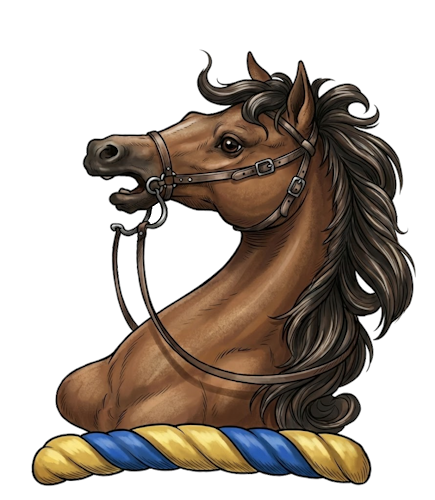
- Alexander (England)
- Belshes (Invermay)
- Bennie (Scotland)
- Benzie (Scotland)
- Binnie (Scotland)
- Binny (Scotland)
- Blacker (Buckingham)
- Blaker (Portslade, Sussex)
- Bruce (Earlshall)
- Bruce (Pittarthie)
- Collyngs (Bury, Suffolk)
- Cowcy, De (England)
- Dancey (England)
- Daninsey (England)
- Darley (Cranfield)
- Dauvergene (England)
- De Cowcy (England)
- Dunbar (Baldoon, Bart.)
- Elmeet (Holland)
- Gisborne (Ireland)
- Hamilton (Lord Belhaven)
- Jekyll (Essex)
- Jekyll (London)
- Lewes (England)
- M’Cracken (Scotland)
- Macquarie (Ormaig)
- Millner (Nun-Appleton, Yorkshire)
- Milner (Nun-Appleton Hall, Yorkshire, Bart.)
- Neat (England)
- Rutherford (Faldon-Side, Scotland)
- Sarebruche (England)
- Smyth (Askham, Nottinghamshire, England)
- Smyth (Crednall, Herefordshire, England)
- Smyth (Hertfordshire, England)
- Smyth (Overton, Shropshire, England)
- Timson (England)
- Twentyman (England)
- Whanfield (England)
Symbolism of the Crest
Horse (or Nag): The horse is one of the most ancient and potent symbols in heraldry, representing readiness for king and country, speed, intellect, and virility. It signifies a spirited warrior or a lineage known for its agility and service. Bridled / Furnished: When the horse is depicted as bridled, it symbolizes disciplined power, constraint, and temperance. It suggests that the bearer possesses great strength and spirit but keeps it under rational control and direction, ready to serve when called upon. Couped: This indicates the head is cut cleanly at the neck, a standard heraldic representation focusing on the head as the seat of intellect and direction.
General Symbolic Meanings
The combination of the horse and the bridle suggests a lineage that values readiness, discipline, and service. It implies a capacity for swift action tempered by wisdom and control. In a military context, it represents a soldier ready to obey commands and execute them with speed and vigor. Variations such as broken reins (as seen in the M’Cracken crest) may suggest a breaking free from restraint or an untamable spirit, while specific colors like Argent (silver/white) represent peace and sincerity, and Sable (black) represents constancy.
The crest on Plate 8, Image 5 (Pl. 8. cr. 5.) is described as a dexter hand (right hand) holding a hunting horn (or bugle horn), often specified as “sans strings” (without strings).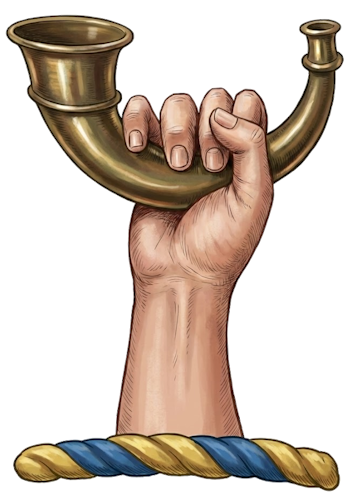
- Ballward (Scotland)
- Balvaird (That Ilk)
- Blaverhasset (England)
- Blaverhassett (England)
- Bryson (Craigton)
- Burn (Scotland)
- Forrester (Carden)
- Hacklet (Scotland)
- Hackluit (England)
- Limborne (England)
- Petit (England)
Symbolism of the Crest
Dexter Hand: The right hand is a pledge of faith, sincerity, and justice; it is the instrument of labor and defense, signifying a person who is industrious and ready to act. Hunting Horn (Bugle Horn): Traditionally associated with the chase and high pursuits, the horn symbolizes military readiness, the call to assembly, and a spirit of alertness. Sans Strings: When depicted without strings, it emphasizes the instrument’s utility and immediate function over ornamentation.
General Symbolic Meanings
The image of a hand grasping a hunting horn suggests a lineage characterized by readiness and vigilance. It implies a readiness to respond to the call of duty or the hunt at a moment’s notice. The accompanying mottos often associated with this crest, such as “Ever Ready” or “Non omnibus dormio” (I sleep not for all), reinforce this theme of alertness and preparation.
The crest on Plate 8, Image 4 (Pl. 8. cr. 4.) is described as a dexter hand (or cubit arm) holding a star (or mullet/etoile), sometimes surmounted by a crescent.
Surnames: 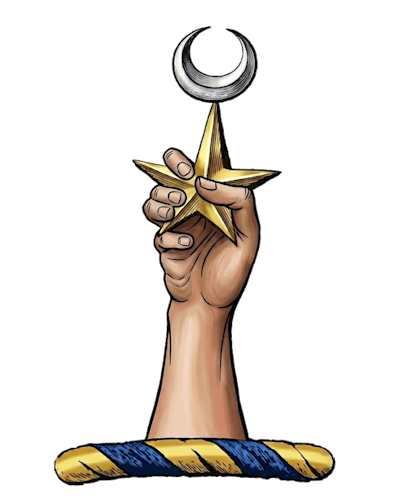
- Dundas (Duddingston)
- Dundas (Manor)
- Hawthorn (Scotland)
- Henderson (Fordell)
- Henderson (Scotland)
- Henderson (Scotland)
- Henrieson (Scotland)
- Shettow (England)
Symbolism Dexter Hand/Arm: The hand is the pledge of faith, sincerity, and justice; it is also the symbol of a person who is industrious and eager to perform their duty. Star (Mullet/Etoile): A star or mullet represents a celestial light, signifying divine quality, excellence, and a noble person; it represents a light shining in darkness, offering guidance, hope, and spiritual enlightenment. Crescent: Often associated with one who has been “enlightened and honored by the gracious aspect of his sovereign,” the crescent represents hope and the expectation of future glory or increase. Azure (Blue): This color symbolizes truth, loyalty, and strength.
General Symbolic Meaning The combination of the hand and the star suggests a family or individual guided by high ideals, divine providence, and a clear sense of direction. It implies that the bearer relies not just on their own strength (represented by the hand) but follows a higher guiding light (the star). The addition of the crescent in some variations reinforces the theme of hope and the expectation of increasing fortune or glory.
Plate Number and Description The crest on Plate 8, Image 3 (Pl. 8. cr. 3.) is described as a human heart, sometimes charged with a rose.
Surnames Associated with this Crest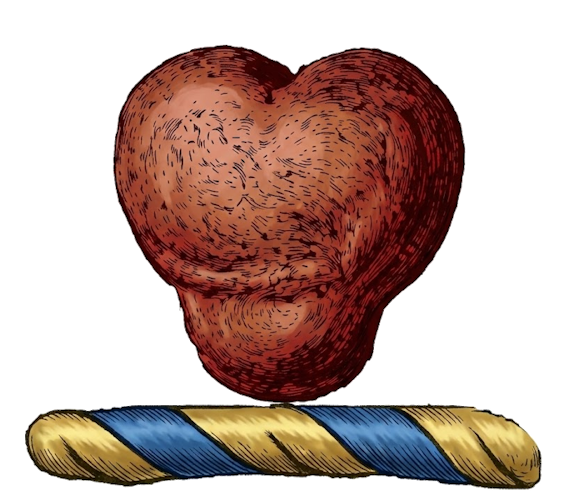
- Burne (England)
- Gray (Dingwall)
- Harte (England)
- Pembrooke (England)
- Rigge (England)
Symbolism of the Crest Human Heart: In heraldry, the heart is historically known as the symbol of sincerity, truth, and charity. It represents a person of sincerity who speaks the truth and is often associated with affection and loyalty. Rose: When the heart is charged with a rose, it incorporates the symbolism of the flower, representing beauty, grace, and hope, suggesting that the sincerity of the bearer brings forth these virtues.
General Symbolic Meaning The image of the heart, particularly when adorned with a rose, suggests a lineage or individual character defined by deep emotional integrity and benevolence. It implies a nature that is not only truthful and charitable but also cultivates grace and beauty through honest actions. It is a crest of passion, loyalty, and moral clarity.