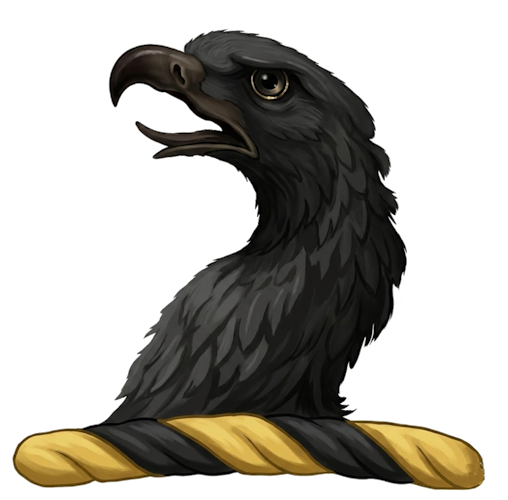
The crest on Plate 6, Crest 12 (Pl. 6. cr. 12, Pl. 6. 12, or Pl. 6. c. 12) is described primarily as an eagle’s head (often couped or erased), though a few variations such as a pelican or martlet appear for specific families in the source text.
Surnames Associated with this Crest
- Aubrey (Buckinghamshire)
- Byme (England)
- Campbell (Scotland)
- Challeng (Gloucestershire)
- Daliender (Suffolk)
- Daliender (Surrey)
- Diggs (Kent)
- Diggs (Wiltshire)
- Dioge (Surrey)
- Dyges (Kent)
- Dyges (Surrey)
- Dyges (Wiltshire)
- Gom (Scotland)
- Gome (Scotland)
- Gorry (Scotland)
- Graham (Scotland)
- Macklin (England)
- M’Lin (England) [
- M’Leod (England)
- Merydale (Buckinghamshire)
- Monro (Scotland)
- Murray (Scotland)
- Oughton (England)
- Rawinson (England)
- Redhead (England)
- Roleston (Nottinghamshire)
- Rolleston (Derbyshire)
- Rolleston (Staffordshire)
- Rosher (England)
- Sideserf (Scotland)
- Sleigh (Scotland) [
- Smithers (England)
- Vaux (Bedfordshire)
- Wexthem (Yorkshire)
Symbolism of the Crest Eagle’s Head: The eagle is revered in heraldry as the king of birds, representing strength, bravery, and keen intellect. The head specifically focuses on the eagle’s quick-wittedness and sharp vision. Erased/Couped: When the head is “erased” (having a jagged edge), it often signifies that the head was torn from the body, a symbol of strength and victory in battle. Rays: In variations where the head issues from rays (like Macklin), it symbolizes glory, divine inspiration, or enlightenment.
General Symbolic Meanings The eagle is a symbol of a person of action, one of high intellect, and of quick-wittedness. It signifies a man of action, occupied with high and weighty affairs. The variation of the martlet (seen in Monckton) represents one who subsists on wings of virtue and merit, having no land to rest on (often associated with younger sons).
The crest on Plate 6, Crest 11 (Pl. 6. cr. 11.) is described primarily as a stag’s (or buck’s) head and neck cabossed, at gaze, or affrontée (facing forward).
Surnames Associated with this Crest: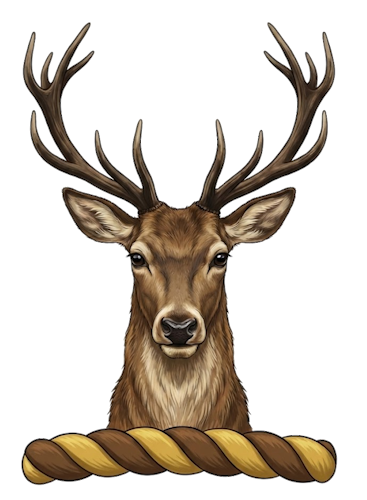
- Adean (England)
- Calibut (England)
- Crosell (England)
- De Romara (England)
- Godard (Eastwood, Hampshire)
- Godart (Upham, Wiltshire)
- Goded (Cherill, Wiltshire)
- Goddard (Scotland)
- Gordon (Scotland)
- Gordon (Gight, Scotland)
- Haw (England)
- Mantell (Hayford, Northamptonshire)
- Mantle (Heyford, Northamptonshire)
- Quelch (England)
- Ramera, De (England)
- Romera, De (England)
- Wallpool (Pinchback, Lincolnshire)
- Walpole (Pinchback, Lincolnshire)
- Windsor (England)
- Windsor (Berkshire)
- Windsor (Aunswell, Warwickshire)
Symbolism of the Crest Stag (or Buck): The stag is a symbol of peace and harmony, representing one who will not fight unless provoked, but who fights vigorously when necessary. It is also associated with purity, fleetness, and longevity. At Gaze / Affrontée / Cabossed: When the head faces forward (“at gaze”), it symbolizes vigilance and acute observation, suggesting a guardian who is ever-watchful. Attires (Antlers): The antlers signify strength and fortitude; shedding and regrowing them represents regeneration and the ability to overcome adversity.
General Symbolic Meaning The image of the stag’s head looking directly at the viewer implies a lineage defined by alertness and a peaceful nature that commands respect. It suggests a family that values wisdom and prudent observation, yet possesses the inherent strength to defend its honor and territory when challenged.
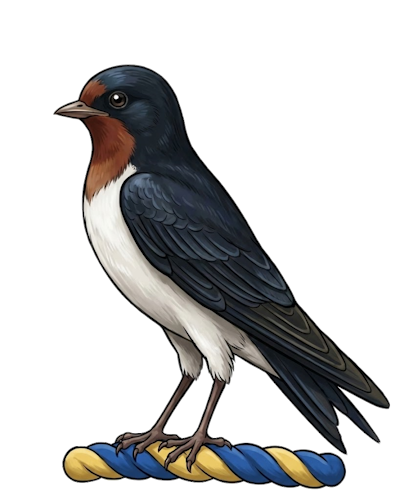
The crest on Plate 6, Image 10 (Pl. 6. cr. 10.) is described as a Martlet (or Swallow) standing, rising, or volant.
Surnames:
- Adderstone (England)
- Addreston (England)
- Aderstone (England)
- Anstay (England)
- Anstee (England)
- Anstey (England)
- Anstie (England)
- Ansty (Cumberland)
- Ansty (Cambridgeshire)
- Argenton (England)
- Arundel
- Asen
- Audley
- Bigot (England)
- Bigott (England)
- Blessone (England)
- Bostock (Shropshire)
- Camac (England)
- Cargil
- Cargil (England)
- Coe (England)
- Crymes (Surrey)
- Crymes (Devonshire)
- Denton (Cumberland)
- Douglas (Scotland)
- Drysdale (Scotland)
- Fournier (England)
- Glasgow (Scotland)
- Glen (Scotland)
- Gossip
- Goutt (Scotland)
- Greive (Northumberland)
- Grimes (London)
- Grive (England)
- Hansard (England)
- Hansarde (England)
- Headley (Huntingdonshire)
- Hedley (Huntingdonshire)
- Hudson (England)
- Hudson (London)
- Keene
- M’Aben (Scotland)
- M’Gill (Scotland)
- Moncton
- Oulton (England)
- Pickett (England)
- Priest (England)
- Proctor (Middlesex)
- Proctor (Cambridgeshire)
- Rathlow (England)
- Reynell (England)
- Riddell (Norfolk)
- Rutherford (Scotland)
- Sandford
- Smith
- Stott (Scotland)
- Stringer (England)
- Struther (Scotland)
- Tempest (Durham)
- Tempeste (England)
- Walkingshaw (Scotland)
- White (Scotland)
- Whyte (Scotland)
- Wiggon (England)
Martlet / Swallow: The martlet is a stylized bird in heraldry, bearing a resemblance to a swallow or house martin, but traditionally depicted without feet (or with very short tufts of feathers in place of legs). This lack of feet symbolizes that the bearer has no land to rest on, often signifying a younger son (specifically the fourth son in cadency marks) who had to subsist on the wings of his virtue and merit rather than on inherited land. It represents swiftness, diligence, and one who is always on the wing, seeking knowledge or fortune.
General Symbolic Meanings The Martlet is a symbol of high aspiration and the necessity of making one’s own way in the world through effort and intelligence. Because it is depicted as always flying and never resting, it denotes a person of prompt readiness, intellectual curiosity, and one who rises above earthly concerns. When associated with specific colors like Sable (black), it can imply constancy and wisdom; when Gules (red), it may signify martial fortitude; and when Or (gold), it suggests generosity and elevation of mind.
Plate Number and Description The crest on Plate 6, Image 9 (Pl. 6. cr. 9.) is described as a mermaid, usually depcited holding a mirror in her dexter (right) hand and a comb in her sinister (left) hand. Variations include the mermaid combing her hair or holding a dagger (though the standard Plate 6 image is the mirror/comb variation).
Surnames Associated with this Crest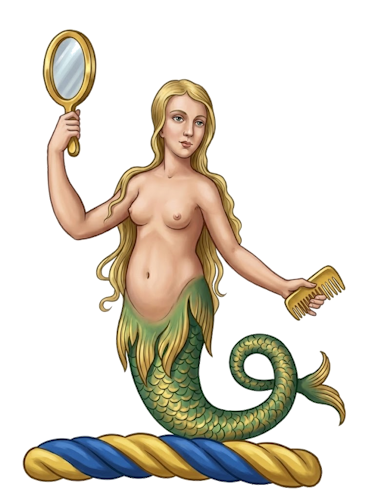
- Allemore (England)
- Atmore (England)
- Biron (England)
- Brewer (England)
- Brumbert (England)
- Bryne (Ireland)
- Byrn (Ireland)
- Byron (England)
- Challon (England)
- Chiswell (London)
- Coltons (England)
- Cullien (Scotland)
- Cusake (Ireland)
- Enell (England)
- Glas (East Indies)
- Glass (Sauchie)
- Glasse (Scotland)
- Golever (England)
- Hastings (England)
- Kinloch (Scotland)
- Lauzon (England)
- M’Nair (England)
- M’Namara (England)
- Marbury (Cheshire)
- Mason (Shropshire; Greenwich)
- Meare (Shropshire)
- Mere (Shropshire)
- Meres (Shropshire)
- Meyne (Shropshire)
- Meyres (England)
- Minett (Shropshire)
- Moore (England)
- More (Somersetshire)
- Mouline (Scotland)
- Murray (Tippermuir; Earl of Dysart)
- Myers (England)
- O’Byrne (Ireland)
- Rutherfurd (Earl of Teviot)
- Sheffington (Kent; Leicestershire; Middlesex; Staffordshire; Lancashire)
- Skarvington (England)
- Skeffington (Earl of Massareene; Viscount Massareene)
- Skuffington (England)
- Sleford (Lincolnshire)
- Wallop (Earl of Portsmouth; Shropshire; Hampshire)
- Warburton (Ireland)
Symbolism of the Crest Mermaid: In heraldry, the mermaid is a classic symbol of eloquence and beauty. Because of her dual nature (human and fish) and her habitation in the ocean, she often signifies a family with a strong connection to the sea, whether through naval service, exploration, or maritime trade. Mirror and Comb: These attributes are traditional accouterments of the mermaid. The mirror represents truth, self-reflection, and prudence (knowing oneself), while the comb signifies care, preparation, and the grooming of one’s appearance or reputation. In some contexts, the mermaid can also symbolize a safe passage through storm and danger.
General Symbolic Meanings The mermaid is a captivating and mythical figure that suggests allure and persuasion. Historically, this crest may indicate an ancestor who was a seafarer, a captivating orator, or someone who overcame the “storms” of life. When combined with mottos such as Luctor non mergor (I struggle but am not overwhelmed) or En suivant la verite (In following the truth), the crest represents resilience, survival against the odds, and a dedication to personal integrity and truthfulness.
Plate Number and Description The crest on Plate 6, Image 8 (Pl. 6. cr. 8.) is described as a dexter hand issuing from the wreath, holding a scroll of paper (or roll of parchment) within a garland of laurel.
Surnames Associated with this Crest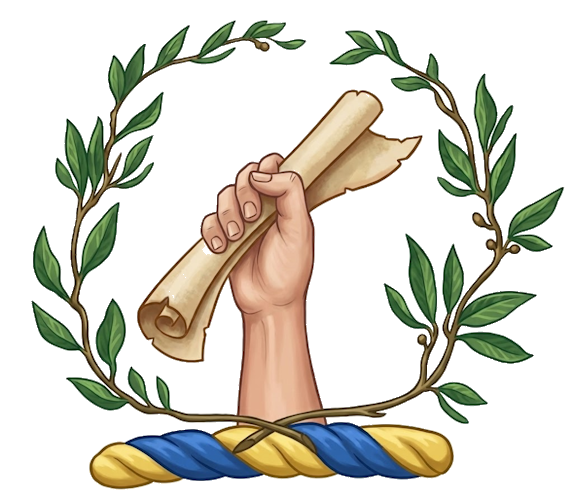
- Gilmer
- Gilmour (Craigmillar, Scotland)
- Isely (England)
- Isley (England)
- Maclauche
- Seyers (England)
Symbolism of the Crest Hand (Dexter): The right hand is the pledge of faith, sincerity, and justice; when open or holding an object, it often signifies a ready willingness to serve or perform duties. Scroll / Roll of Paper: This emblem typically represents legal or academic authority, civil administration, diplomacy, or a learned profession (such as a writer or clerk). Laurel Garland: The laurel is the classic emblem of triumph, victory, and peace; when encircling another object, it implies that the achievement or profession represented by that object is one of distinction and honor.
General Symbolic Meaning The combination of the scroll and the laurel wreath held by a hand suggests “victory through intellect” or “honor through civil service.” Unlike crests featuring swords or arrows, which denote military prowess, this crest signifies achievement in the arts, law, or administration. It implies a lineage or individual celebrated for wisdom, negotiation, or literary and legal accomplishments rather than brute force.
he crest on Plate 6, Image 7 (Pl. 6. cr. 7.) is described as a pelican vulning herself (or in her piety), often depicted with wings expanded or indorsed.
Surnames Associated with this Crest: 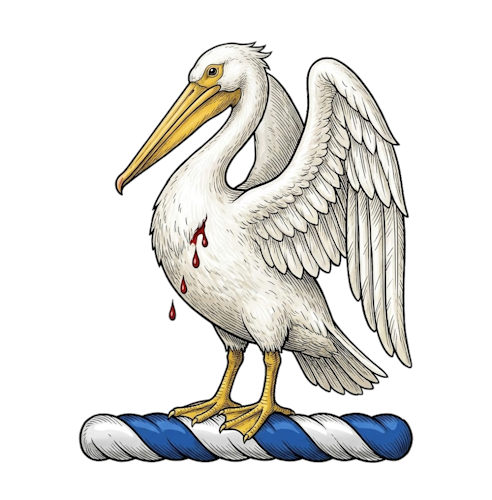
- Aquilion (Yorkshire)
- Arthur (Essex)
- Borthwick (Muirhouse)
- Bromhead (Ireland)
- Buxton (Tibenham, Norfolk; Derbyshire)
- Clavedon (England)
- Cuillan (Carbryl)
- Goldesburgh (Goldesburgh, Yorkshire; Cheping-Onger, Essex)
- Hume (England)
- Jegan (England)
- Kel (England)
- Lechmere (Hanley)
- Leechman (Scotland)
- Leeshman (Scotland)
- Linlithgow
- Nash
- O’Cuilean (Carbry, Ireland)
- O’Meard (Ireland)
- Pell (England)
- Peterson (Scotland)
- Peyrse (Northwold, Norfolk)
- Retton (England)
- Rising (England) A
- Throughston (Throughston, Worcestershire)
- Weatherhead (England)
Symbolism of the Crest Pelican Vulning: The pelican is one of the most powerful symbols in heraldry, representing self-sacrifice, charity, and parental love. When depicted “vulning” (wounding herself) or “in her piety” (feeding her young with her own blood), it serves as a profound religious emblem of Christ’s sacrifice and the Eucharist. It signifies a person who is willing to give everything for their family, country, or faith, embodying the highest virtues of devotion and benevolence.
General Symbolic Meaning The image of the pelican has been revered since antiquity and was adopted early on by Christian theology. In a secular heraldic context, it suggests a lineage known for its care of dependents and readiness to sacrifice personal well-being for the greater good. It is a noble crest that speaks to a legacy of protecting and nurturing others, often associated with those who held positions of responsibility or guardianship.
The crest on Plate 6, Image 6 (Pl. 6. cr. 6.) is described as a stag’s head (or buck’s, hart’s, or deer’s head), usually erased (jagged edge at the neck), and sometimes attired (horned) or charged with various symbols like crescents or fleurs-de-lis.
Surnames Associated with this Crest:
- Andrew (Blackhoulds)
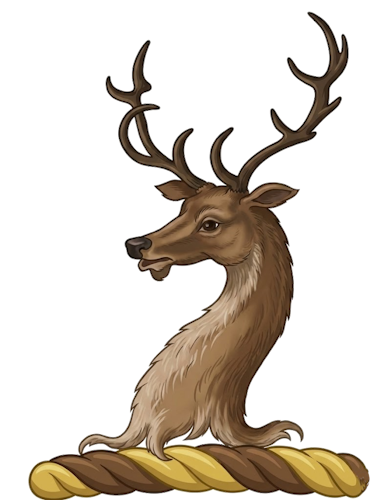
- Andrew (Devonshire)
- Andrewes (Suffolk)
- Andrews (Bishop of Winchester)
- Anbie (England)
- Astry (England)
- Belasin (Lord Wortabye)
- Bell (Jamaica)
- Bellingham (Ireland)
- Broadley (England)
- Brockdon (Brockdone, Devonshire)
- Budorside (Cornwall)
- Budoxhed (Badick, Cornwall)
- Bulworth (England)
- Burleigh (England)
- Calvil (Scotland)
- Cahun (Scotland)
- Cam (England)
- Carr (Ettol, Bart.)
- Carre (Scotland)
- Chelitor (Butterly, Durham)
- Cheytor (England)
- Colquhoun (Kentulor)
- Colquhoun (Kilmardony)
- Connell (Ashtown)
- Court (England)
- Couts (Scotland)
- Creketot (England)
- Dick (Braid, Bart.)
- Dirom (Crichie)
- Dixie (Wyrmondham, Norfolk)
- Edington (Glasgow)
- Egerton (England)
- Finlason (Scotland)
- Forbes (Bully-how)
- Forster (Etherstone)
- Fouler (Scotland)
- Fraser (Fingask)
- Fraser (Auchnagarn)
- Fraser (Scotland)
- Fraser (London)
- Fraser (Leanciune)
- Fraser (East India Company, Scotland)
- Fraser (Eskdale)
- Frazer (Lord Lovat)
- Frazer (Scotland)
- Frewke (England)
- Frisel (Scotland)
- George (Scotland)
- Goff (Ireland)
- Golte (England)
- Goostrey (Buckinghamshire)
- Gordon (Tarquhoun)
- Green (Barnet, Hertfordshire)
- Green (Bristol)
- Green (Oxfordshire)
- Green (Norfolk)
- Green (Wilby)
- Green (Essex)
- Gunter (Chichester)
- Gunter (Emly, Sussex)
- Hanning (England)
- Hartgull (England)
- Hemenhall (England)
- Hengscot (England)
- Hoad (Edmonton, Middlesex)
- Hoad (London)
- Hoare (Middlesex)
- Hume (Scotland)
- Hutchison (Scotland)
- Karr (England)
- Kein (Lord Jedburgh)
- Ker (Cevers)
- Ker (Scotland, Northampton)
- Ker (East India Company)
- Ker (London)
- Knightley (England)
- Lea (England)
- Lister (Fitchworth, Sussex)
- Lister (London)
- Lister (Mydhoppe, Yorkshire)
- Lister (Derbyshire)
- Lister (Rowton, Shropshire)
- Little (Scotland)
- Lloyd (Whitenester, Gloucestershire)
- Lloyd (Cheame, Surrey)
- Lytle (Bart of Ayot, England)
- Macadam (Scotland)
- McDougal (England)
- McGuire (England)
- McLeay (Scotland)
- M’Phaill (Scotland)
- Mason (England)
- Maxwell (Earl of Farnham)
- Maxwell (Bart of Nether Polloc)
- Maxwell (Scotland)
- Mortymer (England)
- Nel (Attleborough, Norfolk)
- Norcliffe (England)
- Ord (England)
- Peele (England)
- Pevelesdon (England)
- Plowden (England)
- Popham (Willington, Somersetshire)
- Popham (Huntworthy, Somersetshire)
- Potkin (Cambridge)
- Potkin (Seven Oaks, Kent)
- Potkin (Richmansworth, Hertfordshire)
- Raikes (England)
- Raynlsford (England
- Raynold (England)
- Read (England)
- Ridgley (Longdon, Staffordshire)
- Ridgley (Abright Hussey, Shropshire)
- Rogand (England)
- Riggeley (Staffordshire)
- Rigmaiden (Wadaker, Lancashire)
- Rigmayden (England)
- Roe (Higham Hill, Essex)
- Roe (Moswell Hill, Middlesex)
- Romayne (England)
- Rone (Langford, Shropshire)
- Ronne (Hounslow, Middlesex)
- Row (Devonshire)
- Sage (England)
- Scot (Hanwood)
- Semple (Cathcart, Renfrewshire)
- Simmons (England)
- Skene (England)
- Smith (Mitcham, Surrey)
- Spence (Lathallan)
- Spence (Edinburgh)
- Spens (Lathallan)
- Spens (Midlen)
- Standley (England)
- Stanley (Skotore, Norfolk)
- Thriepland (Fingask, Bart.)
- Wackett (England)
- Walker (England)
- Whiteley (Shropshire)
- Windsor (Lord Windsor)
- Wiley (Shropshire)
- Woodhead (England)
- Wright (St Edmund’s Bury, Suffolk)
- Wright (Aldington, Kent)
- Wybrants (England)
- Wylde (Worcestershire)
- Yles (Scotland)
- Young (Scotland)
Symbolism of the Crest
Stag / Buck / Hart: The stag is a widely recognized symbol of purity, solitary life, and fleetness. It is often considered the most prudent and sagacious of beasts, symbolizing one who is politic and a lover of harmony. In heraldry, the stag represents one who will not fight unless provoked, but when cornered, will fight to the bitter end. Erased: This term describes a head or limb that appears torn off with jagged edges, rather than cut cleanly (couped). It typically signifies a violent and honorable history, suggesting the ancestor may have been a warrior or attained the crest through a feat of strength.
General Symbolic Meanings
This crest generally symbolizes a lineage connected to the nobility of the hunt or the stewardship of the land. It suggests a family characteristic of alertness and agility, combined with a peaceful nature that transforms into formidable resolve when the family’s honor or safety is threatened.
The crest on Plate 6, Image 5 (Pl. 6. cr. 5.) is described as a dexter hand couped in fess, holding a sword in pale, on the point thereof a garland of laurel.
Surnames: 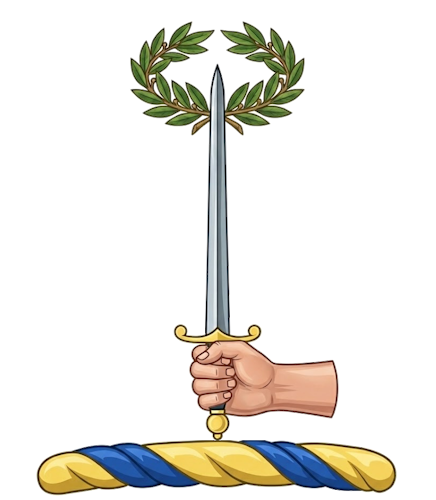
- Cormick
- De Den (England)
- De Dena (England)
- Foule (Colinton)
- Foulis (Yorkshire)
- Ironside (England)
- Tipper (England)
Symbolism of the Crest
-
Dexter Hand (in fess): The hand is the instrument of humanity, representing labor, justice, and sincerity. Positioned fessways (horizontally) and couped, it signifies a firm grasp and readiness to act.
-
Sword (in pale): The sword is the emblem of military honor, power, and authority. Held in pale (upright), it indicates a readiness for battle and the defense of one’s rights.
-
Garland of Laurel: The laurel is the ancient and enduring symbol of victory, triumph, and peace.
-
Combination: The specific arrangement of the laurel wreath resting upon the point of the sword symbolizes “Victory achieved through arms” or peace secured by strength. It suggests that the bearer has won their honors through decisive action and courage.
General Symbolic Meanings This crest embodies the ideal of the “victorious warrior.” It suggests a lineage or individual who values strength not for its own sake, but as the necessary tool to achieve triumph and subsequent peace. It represents a balance between martial capability and the glory of successful enterprise, indicating a family history of defending their honor and succeeding in their endeavors against adversity.
Plate Number and Description The crest on Plate 6, Crest 4 (Pl. 6. cr. 4.) is described as a hunting horn (or bugle horn), often depicted unstrung, garnished, or veruled (banded with metal).
Surnames Associated with this Crest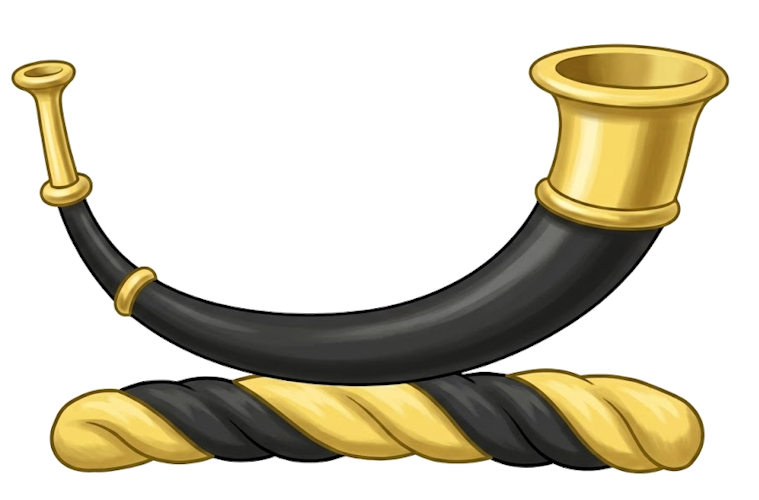
- Aigles (England)
- Amiel (England)
- Ankynsley (England)
- Bellingham (Hasington)
- De La Plisanch (England)
- Delaplaunch (England)
- Grentund (England)
- Hall (Scotland)
- Holding (Middlesex)
- Hull (England)
- Kyde (Craigie)
- Lawthian (Edinburgh) [
- Loudon (Scotland)
Symbolism of the Crest Hunting Horn (or Bugle Horn): The horn is a classic symbol of the chase, representing high pursuits and the privileges of the aristocracy and landed gentry. It signifies one who is high-spirited or a lover of the hunt. In a military context, the horn was used to rally troops, symbolizing leadership, authority, and the call to action. Unstrung: This variation (sans strings) often indicates a specific heraldic difference but retains the primary symbolism of the horn itself. Garnished / Veruled: This refers to the metal rings around the horn, often indicating wealth, status, or a specific office such as a forester or huntsman.
General Symbolic Meaning The combination of the hunting horn implies an ancestor who may have held an office related to the forest or the hunt, or one who possessed the authority to summon and command others. It blends the concepts of leisure and readiness, suggesting a lineage known for alertness, vigor, and the ability to lead when the “call” is sounded.
The crest on Plate 6, Image 3 (Pl. 6. cr. 3.) is described as a tree (often an oak) proper, having a weight (or bell) hung to the branches on each side.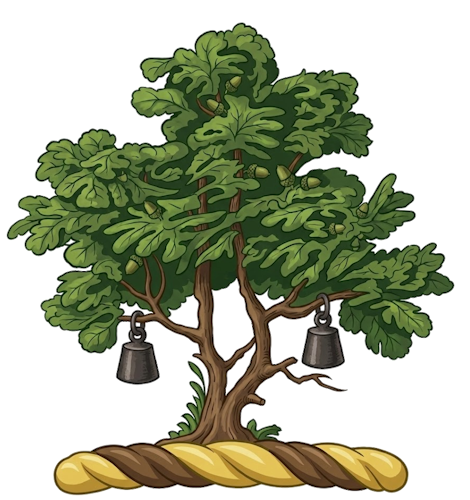
Surnames:
- Alison (Scotland)
- Dexter (England)
- Garman
- Garmon (England)
Symbolism of the Crest
Tree (Oak): The tree, particularly the oak, is a classic symbol of antiquity, strength, and continuous growth. It represents a family that is deeply rooted and enduring. Weights: The weights hanging from the branches are a specific allegorical symbol representing adversity, burden, or heavy responsibility. Proper: This heraldic term indicates that the tree is depicted in its natural colors (usually a brown trunk with green leaves), signifying reality and truth.
General Symbolic Meanings
This crest conveys a powerful message of resilience and fortitude. It is visually linked to the Latin motto often associated with this imagery: Crescit sub pondere virtus (“Virtue grows under weight”). The symbolism suggests that the bearer’s character or the family’s strength does not buckle under pressure; rather, like a tree that grows sturdier when weighed down, they thrive and become stronger in the face of adversity and heavy responsibilities.