The crest on Plate 5, Image 12 (Pl. 5. cr. 12.) is described as a demi-talbot rampant, ducally gorged. While the general image is used for several families, the specific coloration you requested (sable [black] with a or [gold] coronet) is explicitly linked to the Purefey family.
Surnames: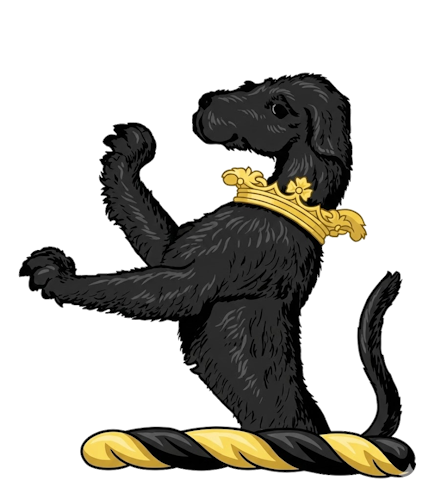
- Aber (England)
- Drummond (Hawthornden)
- Purefey (England)
- Thomason (England)
Symbolism of the Crest
Talbot: The talbot is a medieval hunting hound, now extinct, which is the ancestor of the modern bloodhound. In heraldry, it is a premier symbol of courage, vigilance, and unwavering loyalty. It was often used to signify a faithful guardian or a skilled hunter. Demi-Rampant: The “demi” (half) figure in a “rampant” (rearing up) pose signifies readiness for action and vitality. Ducally Gorged: Being “gorged” means wearing a collar. A ducal coronet used as a collar does not necessarily denote the rank of a Duke; rather, it is often a symbol of high favor, nobility, or the subduing of a fierce nature through noble discipline. Sable (Black) & Or (Gold): The black fur represents constancy and prudence, while the gold collar signifies generosity and elevation of mind.
General Symbolic Meanings
The combination of the faithful talbot and the noble coronet suggests a lineage that prides itself on loyal service and honorable conduct. The hound implies a readiness to hunt or defend, while the gold coronet collar suggests that this energy is disciplined and directed by noble authority or high moral standards. It paints a picture of a “faithful guardian” who serves with distinction.