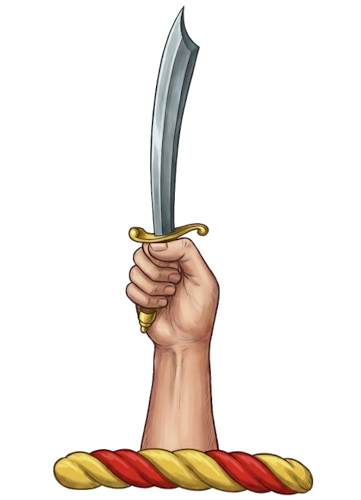
Plate 4, Crest 12 (Pl. 4. cr. 12) is described as a dexter hand holding a sword (or dagger) in pale (upright), proper.
Surnames Associated with this Crest: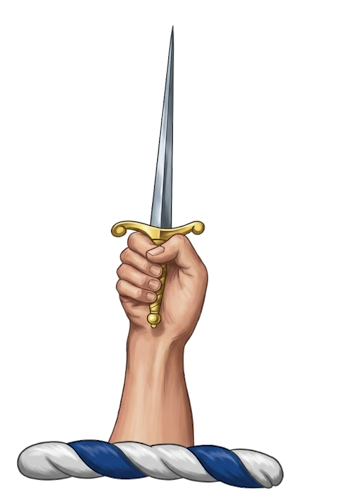
- Arrat (Representative of that Ilk, Scotland)
- Arrat (Lieutenant Colonel)
- Binney (England)
- Chape (England)
- Douglas (Bridgelord)
- Dullse (Scotland)
- Gelstable (England)
- Kyrkdot (England)
- Lyel (Scotland)
- Lyell (Dysart)
- Lyle (Murthill)
- Lyle (Dysart)
- M’Casem (Scotland)
- Naish (England)
- Paterson (Seafield)
- Peter (Scotland)
- Picard (England)
- Primrose (England)
- Stewart (Castlestewart, Scotland)
- Tonyn (England)
- Williamson (Nevis)
Symbolism of the Crest
Dexter Hand: The right hand is historically viewed as the hand of faith, sincerity, and justice, but when grasping a weapon, it primarily symbolizes strength, power, and the capability for action. Sword / Dagger: This is a universal symbol of military honor, power, freedom, and the righteous pursuit of justice. In Pale: Holding the weapon “in pale” (vertically upright) signifies a state of constant vigilance, readiness for battle, and an unyielding stance in defense of one’s kin or country.
General Symbolic Meanings
The combination of the strong hand and the upright sword suggests a lineage characterized by military prowess, a readiness to defend their honor or country, and a straightforward, unyielding nature. It implies that the bearer is prepared to uphold justice or defend their rights at a moment’s notice, often reflected in associated mottos like “In Defence” or “Ready.”
Plate Number and Description The crest on Plate 4, Crest 11 (Pl. 4. cr. 11.) is described as an eel naiant (swimming horizontally) proper.
Surnames Associated with this Crest:
- Ameil (Scotland)
- Armeni (Scotland)
- Boors (England)
- Delane (England)
- Dunkin
- Foy (England)
- Phillipe
- Shipton (England)
Symbolism of the Crest Eel: The eel is often viewed as a symbol of wisdom, slipperiness, and adaptability, representing the ability to slip through danger or difficult situations unharmed and the capability to survive in difficult elements. Naiant: This heraldic term signifies a living creature in a horizontal swimming position, indicating readiness, movement, and the state of being in one’s natural element. Proper: This indicates the charge is depicted in its natural colors, suggesting a connection to nature and reality rather than stylized artifice.
General Symbolic Meanings The eel is a unique heraldic charge that suggests a lineage possessing the wisdom to navigate complex or dangerous waters without being captured or harmed. It implies a personality or family trait of being elusive to enemies, adaptable to changing circumstances, and capable of thriving where others might struggle. The swimming posture (naiant) reinforces themes of vitality, continuity, and silent strength.
The crest on Plate 4, Image 10 (Pl. 4. cr. 10.) is primarily described as a flute, hautboy, or shepherd’s flute in pale (upright), though one surname is associated with a hand holding a sword.
Surnames: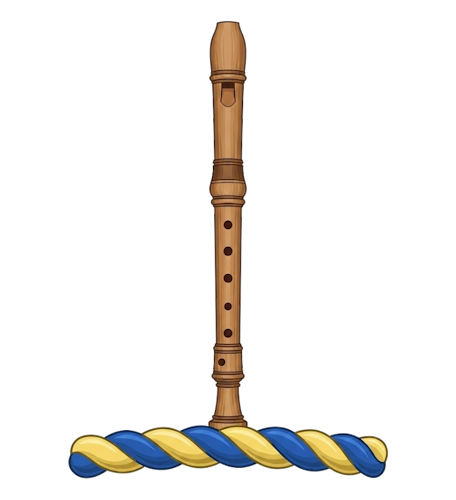
- Abarne (England)
- Ashman (England)
- Belfour (England)
- Bellre (England)
- De La River (England)
- Delariver (England)
- Lavering (England)
Symbolism
Flute / Hautboy / Shepherd’s Flute: These musical instruments are traditional symbols of harmony, peace, and festivity. They often indicate a lover of music or the arts, or perhaps a gentle, pastoral nature rather than a warlike one. In some cases, they may allude to a specific office or tenure. Hand Holding a Sword: This element, specific to the Graham surname on this plate, represents military valour, justice, and the readiness to defend one’s honor or country.
General Symbolic Meaning
The prevalence of the flute or hautboy suggests a lineage that valued culture, harmony, or perhaps held a role associated with music or the court. The contrast of the sword (for the Graham family) introduces a martial element, reminding us that heraldry often encompasses both the arts of peace and the implements of war depending on the specific branch of the family.
The crest on Plate 4, Image 9 (Pl. 4. cr. 9.) is described as a demi-lady (or woman issuing from the middle), richly attired, holding in her dexter hand a tower (or castle) and in her sinister hand a palm branch (or branch of laurel).
Surnames: 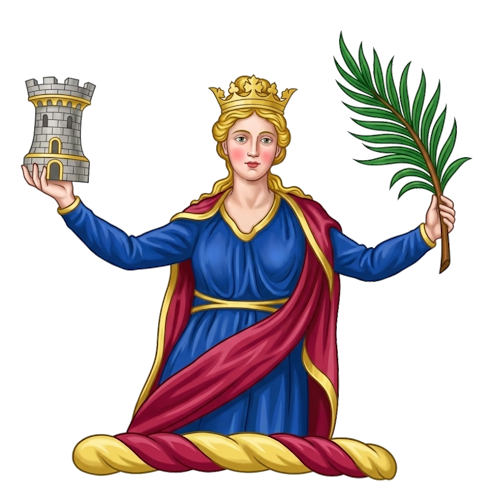
- Aickinson (England)
- Aitkenson (England)
- Baley (England)
- Balle (England)
- Baylee (England)
- Elghingstone (Scotland)
- Elphenston (Scotland)
- Elphingston (Scotland)
- Gardiner (England)
Symbolism of the Crest Demi-Lady: A female figure, often richly attired, typically personifies a specific virtue, such as Fortitude or Victory, or serves as a guardian spirit for the family line. Tower (or Castle): This is a classic emblem of safety, grandeur, solidity, and strategy, representing a stronghold of defense and protection for one’s kin. Palm Branch (or Laurel): The palm is the historic emblem of victory, justice, and triumph over adversity, while the laurel signifies honor, distinction, and peace achieved through success. Balance (for Gardiner): Represents justice, fairness, and the impartial weighing of truth.
General Symbolic Meanings The combination of a female figure holding a fortress and a symbol of victory suggests a lineage that values strength tempered with peace. It implies a family character that is defensive and enduring (the tower) while achieving triumph and distinction (the palm/laurel) through virtuous and honorable conduct rather than pure aggression. For the variation holding a balance, the symbolism shifts toward a dedication to justice, suggesting a family history involved in law or one that prizes equity above all else.
Plate Number: Pl. 4. cr. 8. Description: An astrolabe, proper.
Surnames: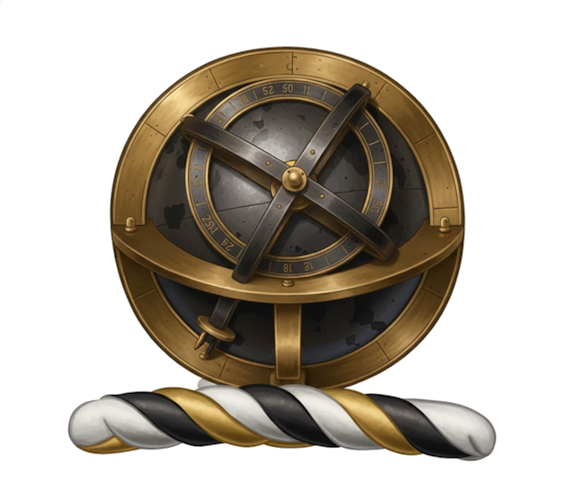
- Actieson (Scotland)
- Allchison (Pittenweem)
- Amwell (England)
- Anwyll (Merionethshire, Wales)
- Atcheson (Pittenweem)
- Lancelot (England)
- Lockyer (England)
- Peche (England)
- Pechey (England)
Symbolism of the Crest
Astrolabe: The astrolabe is a historical astronomical instrument used by navigators and astronomers to measure the altitude of celestial bodies. In heraldry, it symbolizes scientific inquiry, exploration, and navigation. It suggests a family lineage associated with learning, discovery, or maritime travel. The associated motto “Observe” reinforces the themes of vigilance, study, and careful attention to the world and the heavens.
General Symbolic Meaning
This crest represents intellect and the pursuit of knowledge. It stands for guidance, suggesting that the bearer values direction, precision, and understanding the broader universe. It is a symbol often chosen by those who seek to find their way through wisdom and observation rather than brute force.
The crest on Plate 4, Image 7 (Pl. 4. cr. 7.) is described as a camel’s head, couped (sometimes specified as erased or having a distinct neck), often proper, sable, or argent.
Surnames: 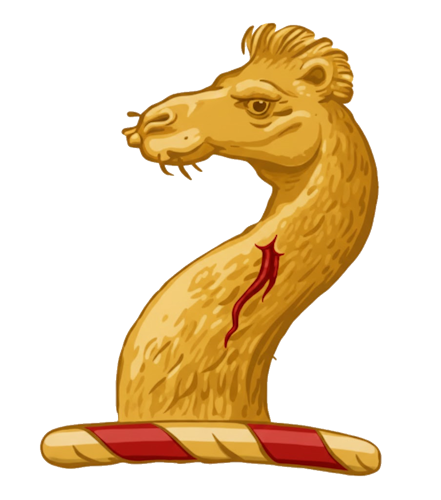
- Abberbury (Oxfordshire)
- Bradford (England)
- Burgis (England)
- Butter (England)
- Camel (England)
- Carron (Scotland)
- Clynch (England)
- Columball (England)
- Crow (Barsley, Kent)
- Edmeston (Scotland)
- Edmiston (Scotland)
- Edmistoun (That Ilk)
- Edmieton (That Ilk)
- Edsatour (That Ilk)
- Emmeloun (That Ilk)
- Fullarton (Craighall)
- Kahi (England)
- Lockwood (England)
- Paley (England)
- Pillerton (Scotland)
- Stother (England)
- Stutvile (England)
- Tivray (Scotland)
- Wheeler (England)
- Woodlume (England)
- Woodthorpe (England)
Symbolism of the Crest Camel / Camel’s Head: The camel is a traditional symbol of patience, endurance, and temperance. It signifies a person or family willing to bear heavy burdens with fortitude and perseverance. Historically, it can also indicate a connection to the East, suggesting an ancestor who may have traveled extensively, engaged in long-distance trade, or participated in the Crusades. Couped: Indicates the head is cut cleanly at the neck, a standard method of heraldic display implying no dishonor.
General Symbolic Meanings The presence of the camel in British heraldry is a distinct nod to resilience and the ability to thrive in difficult environments. It suggests a lineage that values steady progress, reliability, and the strength to persist through long and arduous undertakings without complaint.
The crest on Plate 4, Image 6 (Pl. 4. cr. 6.) is described as a nest containing young birds, variously identified as ravens or pelicans, often depicted in a natural setting.
Surnames: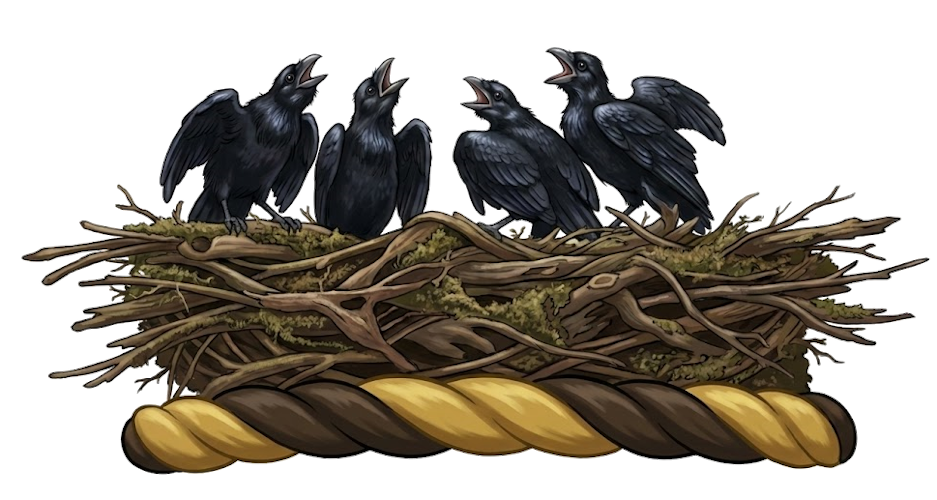
- Chandew (De England)
- De Chandew (England)
- Drummond (Star)
- Fontain (England)
- Knevel (England)
Symbolism Nest: In heraldry, the nest represents the family home, security, and a nurturing environment, signifying a safe haven for the lineage. Young Birds: These symbolize the future generation, growth, fecundity, and the continuation of the family name. Ravens: Specifically associated with the Drummond crest, ravens are symbols of divine providence and protection, referencing the biblical story of Elijah being fed by ravens in the wilderness. Pelican (specific to Chandew): A powerful symbol of self-sacrifice, piety, and maternal love, often depicted feeding its young with its own blood (in its piety).
General Symbolic Meanings The imagery of a nest with young birds suggests a family lineage that values domestic stability, parental care, and trust in the future. When associated with the raven and the motto “Deus providebit” (God will provide), it emphasizes a deep faith in divine provision and protection over the household. It implies a family that flourishes through mutual support and faith.
The crest on Plate 4, Image 5 (Pl. 4. cr. 5.) is described as a demi-greyhound salient (or rampant), sometimes described as collared or proper.
Surnames Associated with this Crest: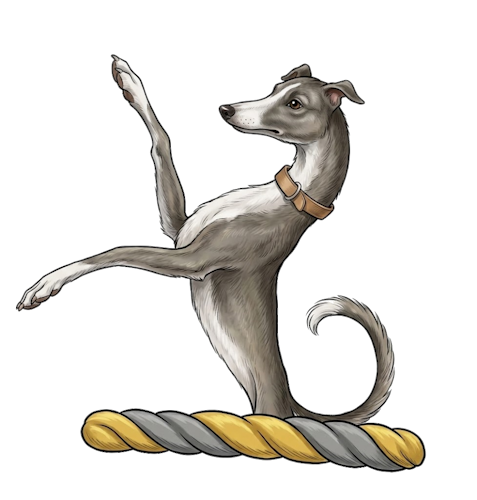
- Cruck (England)
- Elphingstone (Scotland)
- Ford (Scotland)
- Galaad (England)
- Gay (England)
- Green (Stock Newton)
- Jaupin (England)
- Kymeston (England)
- M’Kay (England)
- Riddell (Ardnamurchan, Scotland)
- Riddell (Glenriddell, Scotland)
- Riddell (Kinglass, Scotland)
- Riddle (England)
- Younge (Dunford, Wiltshire)
- Younge (Grenford, Middlesex)
Symbolism of the Crest:
Demi-Greyhound: The greyhound is historically a symbol of courage, vigilance, and loyal fidelity. It was a dog associated with aristocracy and royalty, representing speed and endurance in the chase, which translates heraldically to persistence in one’s goals. As a “demi” figure (showing only the upper half), it often signifies rising action or the readiness to spring into activity. The specific mottoes associated with this crest in the source, such as “Right to share” or “Hope to share,” reinforce themes of ambition and fairness.
General Symbolic Meanings:
The image of the greyhound suggests a family that values alertness and swift action. It implies a lineage that is faithful to its allies and sovereign, yet quick to react when provoked or called upon. The elegant nature of the animal also points to noble standing or a history of sporting traditions, indicating a readiness to pursue opportunities with agility and grace.
The crest on Plate 4, Image 3 (Pl. 4. cr. 3.) is described as a lion’s face (or head full-faced) appearing out of, or looking through, a bush (often specified as oak or yew).
Surnames Associated with this Crest: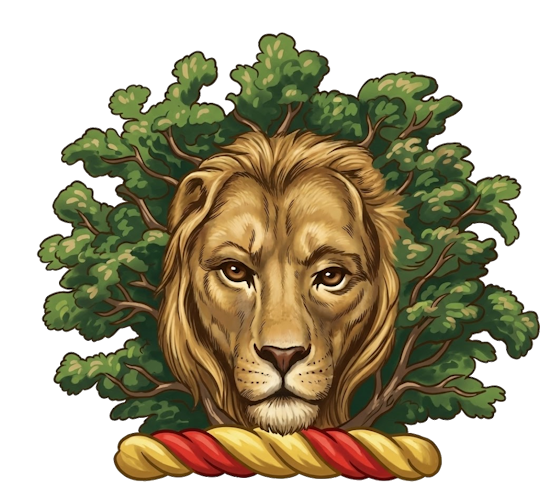
- Cowell (Scotland)
- Dundas (Armiston)
- Dundas (Dundas, Scotland)
- Dundas (Askhall)
- Lacy (England)
Symbolism of the Crest:
Lion’s Face: The lion is the king of beasts and a classic heraldic symbol of undaunted courage, strength, and valor. A lion’s face typically denotes a vigilant and powerful guardian. Bush (Oak or Yew): The bush represents the natural world and shelter. Specifically, the Oak is a symbol of antiquity, strength, and endurance, while the Yew is often associated with resilience and immortality. Emerging/Looking Out: The action of the lion looking out from the bush signifies watchfulness, indicating that the bearer is ready to emerge with strength when necessary, or that their power is rooted in ancient strength.
General Symbolic Meaning:
The image of a lion peering through foliage suggests a blend of natural camouflage and latent power. It implies a lineage that is observant and prudent, yet possesses the ferocity and strength of a lion should they be provoked. It symbolizes a “watchful strength” or a power that is grounded in nature and antiquity.