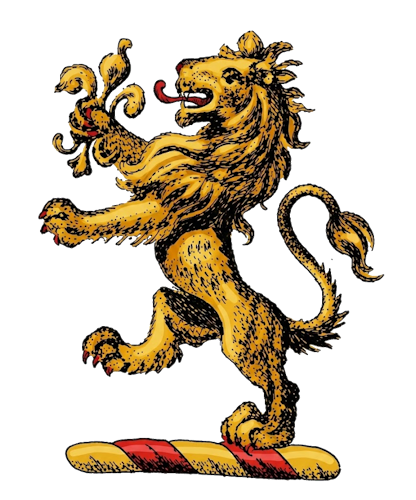
The crest on Plate 2, Image 2 (Pl. 2. cr. 2., also listed as 9.2.0.2) is described as a lion rampant.
Surnames Associated with this Crest: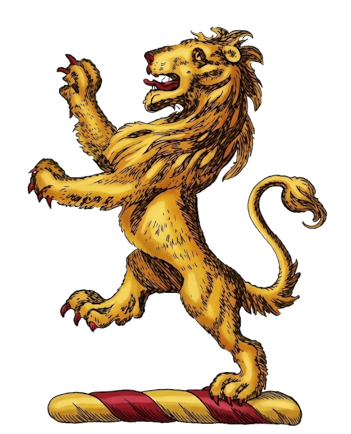
- Bois (England)
- Boyce (England)
- Brampton (Norfolk)
- Brompton (England)
- Brooke (Hampshire)
- Brown (Eccles)
- Brown (Elston)
- Bruce (Earl of Elgin)
- Bruce (Earl of Kincardine)
- Bruce (Scotland)
- Casmajor
- Chard (Leicestershire)
- Coverdall (England)
- Cumming (Sir John)
- Cumming (Bart)
- Dowson (England)
- Fitz Water (England)
- French (Ireland)
- Gerent (England)
- Germin (England)
- Goring
- Grace (Buckinghamshire)
- Graham (Cattock)
- Haggerston (England)
- Holker (England)
- Holker (London)
- Jarveis (England)
- Jarvis (England)
- Keir (Amsterdam)
- Kenan (Scotland)
- King (Viscount Lorton)
- Kylyn (Shropshire)
- Lamb (England)
- Lambert (England)
- Lea (Scotland) [
- Leatun (England)
- Lowis (Scotland) [
- Ludlow (England)
- Ludlow (Earl of Ludlow, Ireland)
- Luxmoore (England)
- M’Diarmid (Scotland)
- Macdermott (Ireland)
- M’Neil (England)
- Marney (Scotland)
- Mathisson (Scotland)
- Mauncell (England)
- Mils (Surrey)
- Modern College (Blackheath)
- Morden College (Blackheath)
- Morrice (England)
- Mostyn (Flintshire)
- Newton (Derbyshire)
- Norfolk (England)
- Northfolke (England)
- Nowne (England)
- Owen (Pembroke)
- Parker (Wales)
- Paslew (Yorkshire)
- Patte (England)
- Peel (England)
- Pelham (England)
- Peryan (Hertfordshire)
- Richards (Sussex)
- Ritson (England)
- Shaw (Scotland)
- Sloan (Scotland)
- Sommers (Scotland)
- Stanger (England)
- Stevens (Cornwall)
- Tappin (England)
- Thorne (Devonshire)
- Toures (Scotland)
- Vaughan (England)
- Vernon (Shropshire)
- Westenra (Lord Rossmore)
- Whale (England)
- Whelerton (England)
- Williams (Sussex)
- Williams (Devonshire)
- Williams (Lincolnshire)
- Wolley (Shrewsbury)
- Worth (England)
Symbolism of the Crest: Lion Rampant: The lion is the king of beasts and one of the most common and noble heraldic symbols. It traditionally symbolizes deathless courage, bravery, strength, and valour. The attitude “rampant” (standing on one hind leg with forelegs raised, head in profile) signifies a magnanimous spirit and a readiness to fight for one’s beliefs or sovereign. It represents a person who is fierce in the face of an enemy but noble in character.
General Symbolic Meaning: The image of the lion in a rampant position suggests a family history rooted in leadership, martial prowess, and fierce protection of their own. It implies a readiness to take action, a noble, commanding presence, and a lineage that prides itself on strength of character and the will to defend its honor.