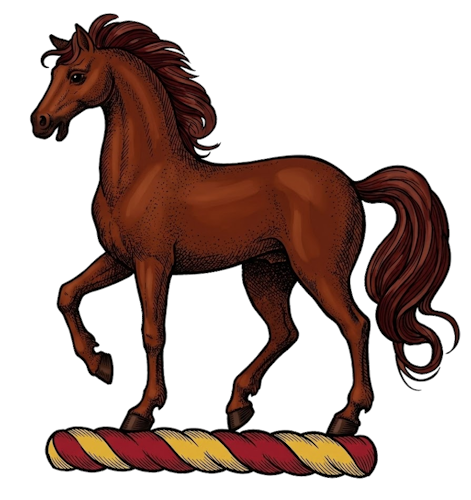
a horse (or colt, or nag) passant (walking) or trotting

The crest on Plate 2, Image 12 (Pl. 2. cr. 12.) is described as a horse (or colt, or nag) passant (walking) or trotting, typically depicted saddled and bridled or free, often argent (silver) or proper.

Surnames Associated with this Crest:

  • Bathurst (England)a horse (or colt, or nag) passant (walking) or trotting
  • Cochran (England)
  • Cochran (Kilmaronock)
  • Cochran (Ochiltree)
  • Cochran (Earl of Dundonald)
  • Cochran (Waterside)
  • Colt (Suffolk) [Described as A colt passant]
  • Cradock (England)
  • East (Riding, Buckinghamshire)
  • East (Hall-place, Berkshire)
  • Jeys (England)
  • Killach (Scotland)
  • Kiribrid (England)
  • M’Culloch (Apliton)
  • Plunket (England)
  • Plunket (Earl of Fingal)
  • Plunket (Lord Louth)
  • Plunkett (Louth)
  • See (Scotland)
  • Trayton (England)
  • Treton (Lewes, Sussex)
  • Trotter (Dreghorn)
  • Trotter (Eddram-Merse)
  • Trotter (Catchitraw)
  • Whitacre (Westbury, Wiltshire)
  • Whittaker (Wiltshire)
  • Whittaker (Shafton, Dorsetshire)

Symbolism of the Crest Horse: The horse is a highly regarded symbol in heraldry, representing readiness for king and country, speed, intellect, and virility. It signifies a spirited nature and high-mettled action. Passant / Trotting: This posture indicates a state of movement and progression, suggesting a family that is active, forward-thinking, and steady in its pursuits. Bridled / Saddled: When the horse is depicted as furnished (saddled and bridled), it signifies readiness for immediate service, discipline, and obedience to duty.

General Symbolic Meanings The horse is traditionally emblematic of war and conflict, but also of high spirit and freedom. A horse depicted “passant” (walking) or “trotting” suggests a disciplined energy—power under control. It implies that the bearer is ready for action but proceeds with dignity, nobility, and purpose rather than reckless haste.
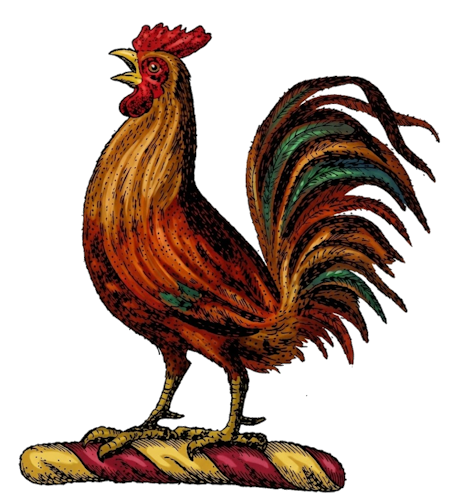
a cock (or rooster), often depicted crowing, standing, or walking

The crest on Plate 2, Crest 11 (Pl. 2. cr. 11.) is described as a cock (or rooster), often depicted crowing, standing, or walking.

Surnames Associated with this Crest:

  • Actimson (Scotland)a cock (or rooster), often depicted crowing, standing, or walking
  • Aind (Scotland)
  • Airth (Scotland)
  • Aitchison (Rochecitoch)
  • Aitkenson (Scotland)
  • Alcock (Sivertost, Northamptonshire)
  • Alcock (England)
  • Alexander (England)
  • Alicock (Northamptonshire)
  • Alkenhead (England)
  • Allen (England)
  • Allicock (England)
  • Allicocke (England)
  • Altkemion (England)
  • Ard (England)
  • Atchison (Scotland)
  • Atchison (England)
  • Atkinson (Scotland)
  • Beltufo (England)
  • Blackiston (London)
  • Blackston (England)
  • Blackstone (Durham)
  • Blakston (England)
  • Blukiston (London)
  • Boles (Suffolk)
  • Bols (England)
  • Brown (Edinburgh)
  • Burgon (England)
  • Coars (Shropshire)
  • Coats (Yorkshire)
  • Cobum (Scotland)
  • Cock (Scotland)
  • Cockburn (England)
  • Cockburn (Lanton)
  • Cockburn (Ormiston)
  • Cockbume (Scotland)
  • Cockridge (England)
  • Coles (Buckinghamshire)
  • Coles (Leicestershire)
  • Cookcworthy (England)
  • Corrie (Edinburgh)
  • Coxson (Yorkshire)
  • Crow (Caermarthenshire)
  • Currie (Edinburgh)
  • Cusne (England)
  • Dewar (Lassode)
  • Dounie (Scotland)
  • Downfield (England)
  • Downie (Scotland)
  • Ducarell (Lambeth, Surrey)
  • Dush (England)
  • Eldecur (England)
  • Ellercur (England)
  • Emmerson (England)
  • Forbes (Craigivar)
  • Grant (Auchnanie)
  • Grave
  • Grubbham
  • Guion (England)
  • Guyon (England)
  • Hancock (England)
  • Hellier (England)
  • Helyard (England)
  • Hilliard (Durham)
  • Hilliard (Yorkshire)
  • Hillyard (Yorkshire)
  • Holden (Scotland)
  • Hyldyard (England)
  • Ingram (Essex)
  • Ingram (Herefordshire)
  • Ingram (London)
  • Ingram (Viscount Irvine)
  • Ingram (Warwickshire)
  • Ingram (Worcestershire)
  • Ingram (Yorkshire)
  • Johnson (London)
  • Johnson (Yorkshire)
  • Kay (Dorsetshire)
  • Kognose (England)
  • Landle (Scotland)
  • Langley (Lancashire)
  • Langley (Suffolk)
  • Langley (Yorkshire)
  • Law (Lord Ellenborough)
  • Law (Lawbridge)
  • Laws (Scotland)
  • Lee (Middlesex)
  • Lodwich (England)
  • Lyle (Scotland)
  • M’Worth (England)
  • Mackworth (Glamorganshire)
  • Mathieson (Scotland)
  • Nowlan (England)
  • Ormstone (Scotland)
  • Perin (England)
  • Rig (Tegsland)
  • Rigg (England)
  • Rigg (Downfield, Scotland)
  • Rocheford (England)
  • Rowdon (England)
  • Simond (London)
  • Slaten (England)
  • Standish (Berkshire)
  • Standish (Lancashire)
  • Standish (Leicestershire)
  • Stephens (Waterford)
  • Tamworth (Lincolnshire)
  • Tamworth (London)
  • Tharpe (London)
  • Thorpe (Northampton)
  • Thring (England)
  • Tosh (Scotland)
  • Tunstall (Durham)
  • Tunstall (England)
  • Tunstall (Yorkshire)
  • Vavasor (Yorkshire)
  • Vavasour (Lincolnshire)
  • Vavasour (Northamptonshire)
  • Vavasour (Yorkshire)
  • Williams (Hertfordshire)
  • Williams (Middlesex)
  • Wykes (England)

Symbolism of the Crest

Cock / Rooster: The cock is a widely recognized heraldic symbol of vigilance, courage, and virility. Known as the “Herald of the Morning,” it represents watchfulness and a readiness to greet the dawn or face danger. When depicted crowing or with wings flapping, it emphasizes a readiness for battle and an eagerness to defend one’s territory. In many instances, it is also considered a bird of light, symbolizing the triumph of light over darkness or good over evil.

General Symbolic Meanings

The image of the rooster generally implies a lineage or individual characterized by boldness and alertness. It suggests a family that values bravery in conflict and diligence in peace. Often associated with heroes, the cock signifies a person who is always prepared and will not be taken by surprise, embodying the motto often associated with it: “Vigilans et Audax” (Vigilant and Bold).

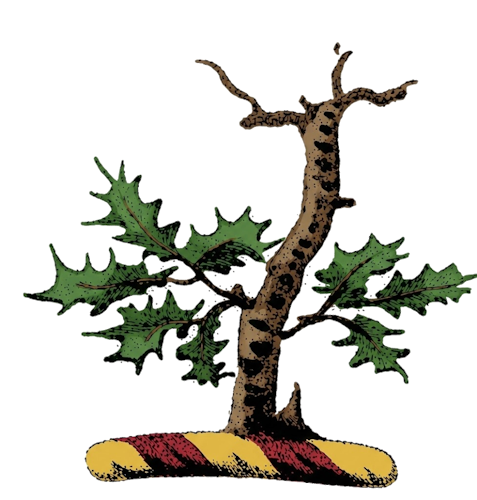
a withered holly branch (or stump) shooting out new leaves

The crest on Plate 2, Image 10 (Pl. 2. cr. 10.) is described primarily as a withered holly branch (or stump) shooting out new leaves.

Surnames:a withered holly branch (or stump) shooting out new leaves

  • Christie (Craigton, Scotland)
  • Handcock (England) 
  • Hendey (England) 
  • Hendy (England) 

Symbolism of the Crest Holly / Sprouting Branch: The holly tree is a symbol of truth and foresight, often used to denote protection and consistency due to its evergreen nature. The specific imagery of a withered branch (or stump) shooting out new leaves is a powerful heraldic metaphor for regenerationresurrection, or the restoration of a family’s fortunes after a period of decline or hardship. It represents resilience and the idea that the lineage, though perhaps having faced difficulties, is flourishing once again. Horse: Where the crest depicts a horse, it typically symbolizes readiness for king and country, speed, intellect, and spirit.

General Symbolic Meaning The primary motif of the sprouting holly branch suggests a narrative of survival and renewal. It implies a family that values their history and endurance, possessing the vitality to recover and thrive despite past adversities. It is a hopeful symbol, often accompanied by mottos referring to growing green again or flourishing. The alternative horse imagery associated with this plate number for specific families adds a layer of martial readiness and agility to the crest’s history.

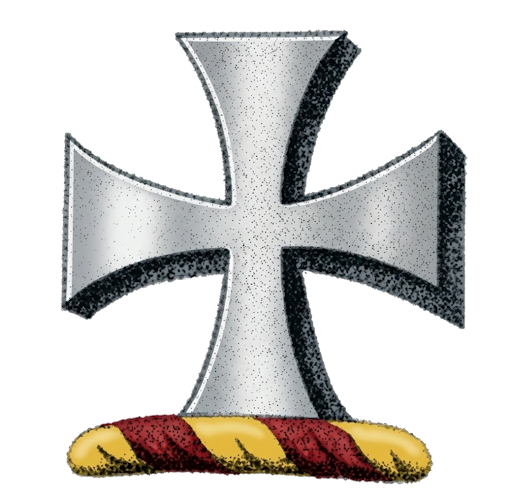
as a cross pattée

The crest on Plate 2, Image 9 (Pl. 2. cr. 9.) is described as a cross pattée (or cross formee), occasionally described as ermine, gules, or azure depending on the specific family.

Here are the surnames associated with this crest:

  • Archdalla cross pattée (or cross formee)
  • Barclay (Touch)
  • Barclay (Balmakewan)
  • Barclay (Collerny)
  • Cesar (Huntingdonshire)
  • Cheyne (Scotland)
  • Forbes (Foveran)
  • Fouk (England)
  • Marry (England)
  • Mersar
  • Rossie (Scotland)
  • Triton (England)

Symbolism of the Crest

Cross Pattée: Also known as the Cross Formée, this symbol is strongly associated with knighthood and the Crusades. It represents faith, service, and protection. The spreading ends of the arms are sometimes said to represent the wings of a bird covering its young, symbolizing protection and charity. Ermine/Tinctures: When depicted as ermine (as with Archdall and Triton), it signifies dignity and high rank; when gules (red), it represents martial fortitude and magnanimity; when azure (blue), it symbolizes truth and loyalty.

General Symbolic Meanings

The cross pattée is a quintessential heraldic emblem combining religious devotion with military honor. It suggests an ancestor who may have been a crusader or a person of significant knightly standing. The mottos often associated with this crest, such as “Crux salutem confert” (The cross confers salvation), emphasize a lineage that places its trust in spiritual strength and divine guidance, valuing honor and faith above material gain.

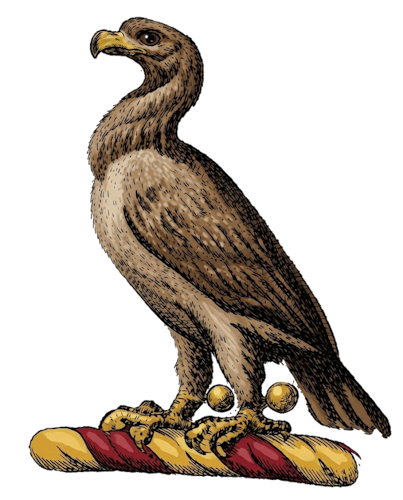
a hawk (or falcon) close

The crest on Plate 2, Crest 8 (Pl. 2. cr. 8.) is described as a hawk (or falcon) close (standing with wings folded against the body), often detailed as belled (with bells on its legs) and jessed (leather straps). Some variations include the bird as a dove or other specific birds, as noted below.

Surnames Associated with this Cresta hawk (or falcon) close

  • Bolton (Suffolk / England)
  • Brabon (Devonshire)
  • Braboume (Devonshire / London)
  • Chambers (Baron Tartas)
  • Colepeper (England)
  • Culpeper (Lord Thorneway)
  • Drummond (Lord Maderty / England)
  • Dubois (England)
  • Gulline (Scotland) [Dove]
  • Hawk (England)
  • Hewson (England)
  • Lacon (Audly, Essex / Ryby, Lincolnshire / Monstow / Kinlett, Shropshire / London)
  • M’Eniery (Ireland/Scotland)
  • M’Morran (Scotland)
  • Sparhawk (England)
  • Watt (Scotland)
  • Webber (Scotland)
  • Yanworth (Suffolk)

Symbolism of the Crest

Falcon (or Hawk): The falcon is a classic symbol of eagerness, pursuit, and one who does not rest until their objective is achieved. It was a bird of aristocracy and sport, signifying a person of high spirit and noble nature. Close: When depicted “close” (wings folded), it suggests patience and latent power, a readiness to act when the moment is right rather than impulsive action. Belled and Jessed: The presence of bells and jesses (leather straps used in falconry) symbolizes discipline and training; it indicates that the bearer possesses high capabilities but is governed by wisdom or duty, rather than wild instinct.

General Symbolic Meaning

The image of the belled falcon combines the concepts of high ambition with disciplined service. It suggests a lineage that values readiness and tactical patience over brute force. In heraldry, it often implies that the bearer is a person of keen vision and swift action, yet remains reliable and steadfast under authority or duty.

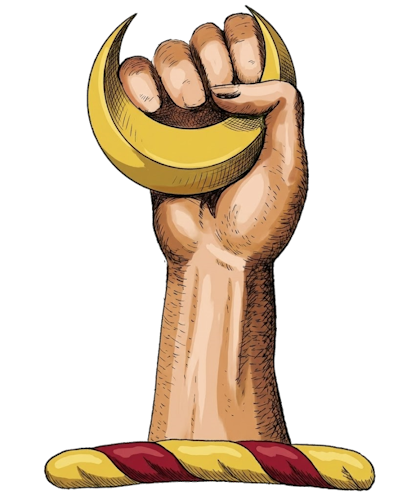
a dexter hand (or cubit arm, sometimes vested) holding up a crescent

The crest on Plate 2, Image 7 (Pl. 2. cr. 7.) is described as a dexter hand (or cubit arm, sometimes vested) holding up a crescent.

Surnames Associated with this Crest:a dexter hand (or cubit arm, sometimes vested) holding up a crescent

  • Cathcart (Viscount Cathcart)
  • Cathcart (Carleton)
  • Cathcart (Cartidon)
  • Clater (England)
  • Elliott (England)
  • Kemaby (England)
  • Knows (Scotland)
  • Lees (Bart, England)
  • Losh (England)
  • Naper (Sinowdley House)
  • Napier (Middle-Merthall, Dorset)
  • Napier (Buckinghamshire)
  • Napier (Blackstoun)
  • Robertson (Scotland)
  • Smellie (England)
  • Somervill (Lord Campnethan, Scotland)
  • Sommerville (Scotland)

Symbolism of the Crest

Dexter Hand (or Arm): The hand is a pledge of faith, sincerity, and justice. When shown as a dexter (right) hand or arm, it signifies power, strength, and the capacity for action. Crescent: The crescent moon is a symbol of hope and “increase” (as the new moon waxes). It suggests the anticipation of greater glory or rising fortunes. In religious terms, it can symbolize one who has been enlightened by gracious aspects of their sovereign. Vested Arm: When the arm is clothed (vested), it often denotes dignity or a specific office, distinguishing the bearer from a warrior who might display a naked arm.

General Symbolic Meanings

The combination of the hand and the crescent creates a powerful emblem of hopeful ambition and steady growth. It suggests a lineage or individual dedicated to upholding honor with the expectation of future prosperity. The mottoes associated with this crest, such as “I hope to speed” (Cathcart) or “Donec rursus impleat orbem” (Until it fills the orb again – Sommerville), reinforce this theme of resilience, cyclical return to power, and the patient pursuit of success.

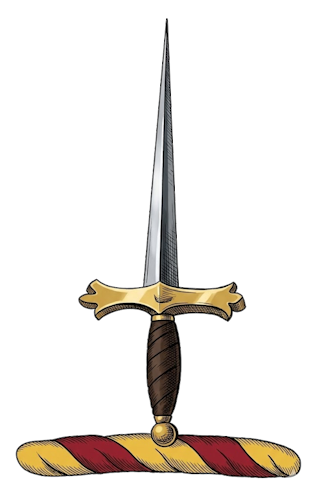
A sword in pale

The image corresponds to Plate 2, Crest 6 (A sword in pale) or  (A dagger in pale). Both represent a weapon held upright.

Surnames:A sword in pale

  • Aberkerdour (Scotland)
  • Aberkerdor (Scotland)
  • Barclay (Pearston, Scotland)
  • Blan (Scotland)
  • Blane (Blanefield, Scotland)
  • Blean (Scotland)
  • Cazenove (England)
  • Dalziel (Earl of Carnwath)
  • Damer (England)
  • Dymock (Lincolnshire)
  • Gowan (Scotland)
  • Osburne (Peppermill)
  • Poyntz (England)
  • Roundell (Hutton Wansley, Yorkshire)
  • Scobie (England)
  • Toding (Scotland)
  • Todrig (Scotland)
  • Vintris (England)
  • Borston (England)
  • Buchanan (Auchleshie)
  • Cairncross (Balmashannon)
  • Coytmore (England)
  • Dalzell (England)
  • Durnford (England)
  • Macjuire (Ireland)
  • M’Quire (England)
  • Pring (England)
  • Thetford (England)
  • Winbolt (England)

Symbolism of the Crest Sword / Dagger: In heraldry, the sword is a weapon that symbolizes justice and military honor. It represents the power to wage war and the authority to administer justice. When depicted “in pale” (vertical), it signifies a readiness to serve and a stance of defense. Erect Position: The upright position of the weapon emphasizes vigilance and action, suggesting a family that is always prepared to defend its rights and principles. Gold Hilt (Pommel and Crossguard): The specific coloring of a steel blade with a gold hilt often denotes purity of purpose backed by generosity and elevation of mind.

General Symbolic Meanings The solitary sword is a potent symbol of executive power and righteous authority. Unlike a sword held in a hand (which emphasizes the act of wielding power), the standalone sword often represents the abstract concept of justice or the state of being prepared for conflict. It suggests a lineage that values honor, maintains a strong defensive posture, and upholds the law.

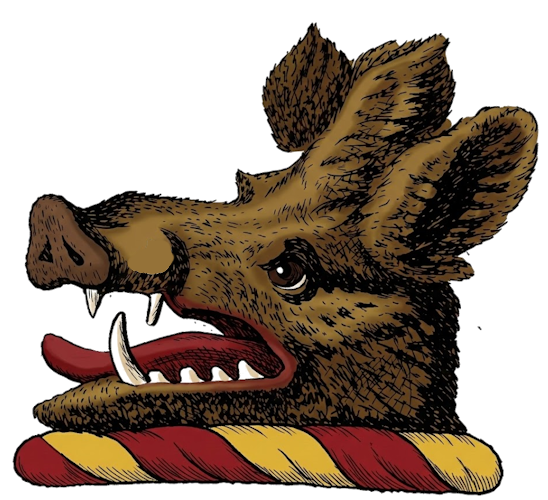
a boar’s head couped

The crest on Plate 2, Image 5 (Pl. 2. cr. 5.) is described as a boar’s head couped (cut smoothly at the neck), though some variations describe it as erased or include specific colors and charges.

Surnames:

  • Adams (London, England)a boar's head couped
  • Asheton (Cheshire, England)
  • Asheton (Lancashire, England)
  • Aston (Cheshire, England)
  • Asshetton (Scotland)
  • Assheton (England)
  • Baillie (Hoperig, Scotland)
  • Bairnsfather (Scotland)
  • Baker (England)
  • Barnbe (Barton, Lancashire)
  • Bassel (Warwickshire, England)
  • Brodley (London, England)
  • Brodley (Lancashire, England)
  • Brokesby (Melton-Mowbray, Leicestershire)
  • Campbell (Duke of Argyle, Scotland)
  • Campbell (Ashnish, Scotland)
  • Campbell (Earl of Islay, Scotland)
  • Champayn (Shapwick)
  • Cruickshank (Amsterdam, Netherlands)
  • Cruickshanks (Scotland)
  • Cunningham (Baushan, Scotland)
  • Downing (England)
  • Eel (England)
  • Fouks (England)
  • French (Scotland)
  • Gordon (England)
  • Gordon (Clunie, Scotland)
  • Gough (Somersetshire, England)
  • Grobham (Great Wishford, Wiltshire) [
  • Haliday (Tillibote, Scotland)
  • Halliday (Tullybole, Scotland)
  • Hallyday (Scotland) [
  • Humphress (England)
  • Innes (Innes, Scotland)
  • Kercy (England)
  • Knaplock (Winchester, England)
  • Lawless (Scotland)
  • Lychfield (Shropshire, England)
  • M’Liver (Ashnish, Scotland) [
  • Rodney (Devonshire, England)
  • Seaton (Tough, Scotland)
  • Seton (Touch, Scotland)
  • Seton (Culbeg, Scotland)
  • Sheils (Scotland)
  • Swineen (Staffordshire, England)
  • Swineen (Sutton Chenell, Leicestershire)
  • Stewart (Scotston, Scotland)
  • Tallerton (England)
  • Tarley (England)
  • Tasker (England)
  • Thimbleby (Irnham, Lincolnshire)
  • Thin (Scotland)
  • Torley (England)
  • Tyzard (England)
  • Urquhart (Newhall, Scotland)
  • Vaughan (Dudleston, Shropshire)
  • Vennor (England)
  • Warcop (Silverdale, Yorkshire)
  • Warcupp (Cumberland, England)
  • Warcupp (English, Oxfordshire)
  • Warcupp (Northmore, Oxfordshire)
  • Williams (England)
  • Winstanton (England)
  • Wrotesley (England)
  • Wynn (Duddleston, Shropshire)

Symbolism of the Crest

Boar’s Head: The boar is a classic heraldic symbol of courage and fierceness in battle. It represents a warrior who would rather die than flee, as the boar is known to fight to the death. In Scottish heraldry, the boar’s head is often associated with hospitality (as it was the head of the feast) or with the defeat of a dangerous enemy/outlaw. Couped: This term signifies that the head is cut cleanly in a straight line, distinguishing it from “erased” (which would look torn). This serves as a mark of difference between branches of families but generally retains the primary symbolism of the animal itself.

General Symbolic Meaning

The boar’s head is one of the most prominent symbols in British and Scottish heraldry, particularly among the Campbell, Gordon, and Swinton clans. It suggests a lineage with a history of bold military service and unflinching bravery. When associated with the mottoes found in this list (such as “Ne obliviscaris” – Do not forget), it implies a deep respect for ancestry and a warning to enemies that the bearer is as dangerous when provoked as the wild boar.

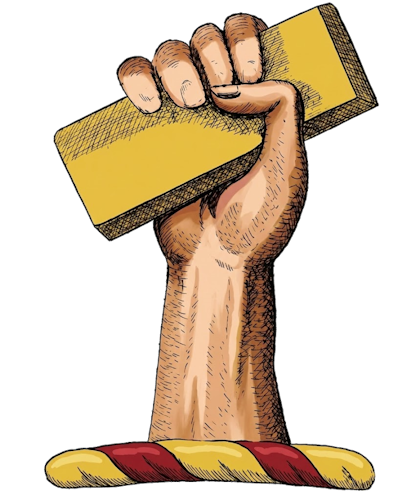
a hand holding a billet

The Crest: Hand Holding a Billet The crest on Plate 2, Crest 4 (Pl. 2. cr. 4.) is described as a dexter (right) hand, often couped (cut off straight), holding a billetThe specific variation you mentioned (“a dexter hand, gules, holding a billet, sable”) is explicitly listed for the surnames Innes and M’Braid.

Surnames:  

  • Ambros (England) 
  • Ambrose (England) 
  • Callander (Kincaledine)
  • Callander (Craigforth) 
  • Callendar (Scotland) 
  • Coldicott (England) 
  • Innes (Writer to the Signet, Edinburgh) 
  • M’Braid (Scotland) [
  • Palishull (England) 
  • Pattishall (England) 
  • Prydeux (England) [

Symbolism of the Crest The Hand (Dexter Hand): In heraldry, the hand is a symbol of faith, sincerity, and justice. It represents the pledge of faith (the “main de justice”) and is often associated with industry and hard work. The Billet: A billet is a rectangular bearing representing a folded letter, a scroll of paper, or a block of wood (used in construction). It symbolizes credibility, trustworthiness, and diplomacy (as a letter) or firmness and stability (as a building block).

General Symbolic Meanings The combination of a hand grasping a billet suggests a lineage distinguished by administrative trust, legal authority, or diplomatic service. It implies a family known for keeping their word, handling important correspondence, or maintaining the stability of their house through wise counsel and faithful service.

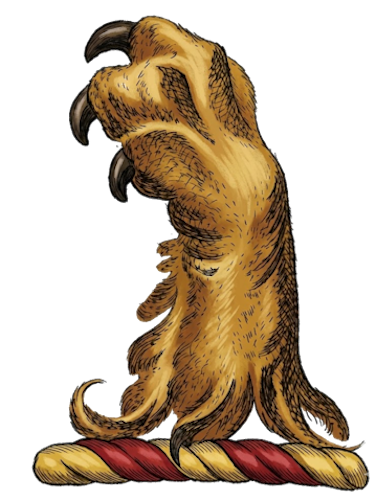
a lion’s gamb (paw) erased and erect

The crest on Plate 2, Image 3 (Pl. 2. cr. 3.) is described primarily as a lion’s gamb (paw) erased and erect, often holding an object (like a cross or branch)

Surnames Associated with this Crest:a lion’s gamb (paw) erased and erect

  • Austin (England)
  • Barnard (Stakey, Norfolk)
  • Boothby (Bradley Ashe) 
  • Bruyeres (England)
  • Buchanan (Sound) 
  • Carmarden (London) 
  • Carmarden (Kent) 
  • Clipsham (England) 
  • Deale (England)
  • Dumas 
  • Goldingham (Banham, Norfolk)
  • Gouldingham (England) 
  • Hurry (Scotland) 
  • Kennard (England) 
  • Litars (Scotland) 
  • Livesay (England) 
  • Livesey (England) 
  • M’Dougal (Garthland) 
  • M’Dowal (Freugh) 
  • M’Dowall (Garthland)
  • M’Millan (Edinburgh) 
  • Magnus (England) 
  • Newcom (Lincolnshire) 
  • Newcombe (Saltfleetby, Lincolnshire) 
  • Newdigate (Surrey)
  • Pegg (England) 
  • Pickering (Titchmarsh, Northamptonshire) 
  • Pickering (Paxton, Huntingdonshire) 
  • Pickering (Sussex) 
  • Pickering (Oswaldkirk, Yorkshire)
  • Pickering (Whadon, Cambridgeshire)
  • Pickering (Isham, Northamptonshire) 
  • Pickering (Gretton, Northamptonshire)
  • Pickering (Tablehurst, Sussex) 
  • Pickering (East Grimsted, Sussex) 
  • Pole (Shute, Devonshire) 
  • Savage (England)
  • Thodey (England) 
  • Ure (Scotland) 
  • Urie (Scotland) 
  • Urrie (Scotland) 
  • Whitehouse (England) 
  • Whitmarsh (England) 
  • Worrall (England)

Symbolism of the Crest:

  • Lion’s Gamb (Paw): The lion’s paw, or “gamb,” is a symbol of strength, bravery, and martial power. When erased (torn from the body), it signifies that the bearer possesses the qualities of the whole lion—courage, nobility, and fierceness—concentrated in the arm that wields the weapon.

General Symbolic Meanings:

The two primary variations of this crest—the lion’s paw speaks to a martial heritage. The lion’s paw emphasizes raw power and the ability to defend one’s kin and country, often associated with families who have shown tenacity in battle.