The crest on Plate 7, Image 9 (Pl. 7. cr. 9.) is described as an oak tree, proper, fructed (bearing acorns), issuing from a ducal coronet, or, and penetrated transversely in the main stem by a frame saw, proper.
Surnames: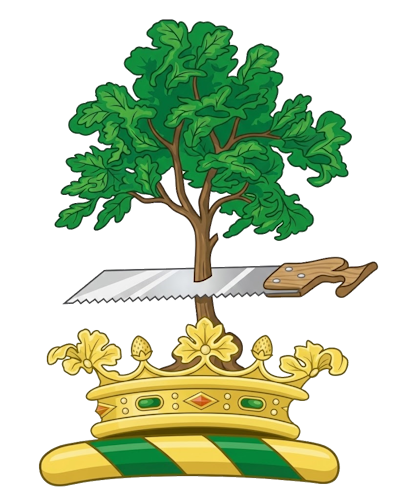
- Hamilton (Viscount Boyne)
- Hamilton (Earl of Ruglen)
- Hamilton (Marlborough House, Portsmouth)
- Hamilton (Duke of)
- Hamilton (Bart, Scotland)
- Hamilton (Earl of Abercorn)
Symbolism Oak Tree: The oak is the king of the forest, representing antiquity, strength, and endurance; when Fructed (bearing acorns), it signifies continuous growth, fertility, and a long-standing lineage. Ducal Coronet: A symbol of high nobility, authority, and rank, serving here as the base from which the crest issues. The Saw: This unique charge represents the famous Hamilton legend of “Through.” It commemorates the escape of Sir Gilbert de Hamilton in 1323, who disguised himself as a woodcutter to evade English pursuers. When his servant hesitated upon seeing the soldiers, Sir Gilbert shouted “Through!” to keep the saw moving and hide their identity.
General Symbolic Meanings This crest serves as a powerful narrative of survival, quick thinking, and resilience. It combines the emblem of highest nobility (the coronet) with a humble tool of labor (the saw), suggesting that true strength lies in the ability to adapt to dangerous circumstances. It implies a lineage that is not only ancient and strong like the oak but also capable of cutting through obstacles and perseverance in the face of adversity.