The crest on Plate 6, Crest 11 (Pl. 6. cr. 11.) is described primarily as a stag’s (or buck’s) head and neck cabossed, at gaze, or affrontée (facing forward).
Surnames Associated with this Crest: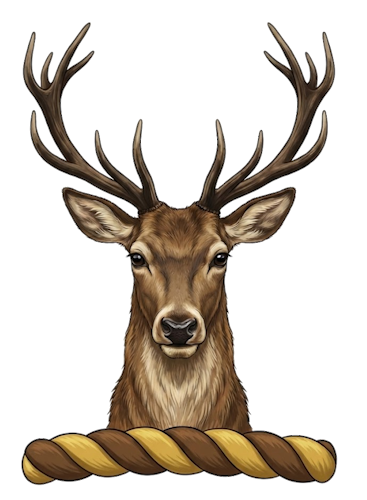
- Adean (England)
- Calibut (England)
- Crosell (England)
- De Romara (England)
- Godard (Eastwood, Hampshire)
- Godart (Upham, Wiltshire)
- Goded (Cherill, Wiltshire)
- Goddard (Scotland)
- Gordon (Scotland)
- Gordon (Gight, Scotland)
- Haw (England)
- Mantell (Hayford, Northamptonshire)
- Mantle (Heyford, Northamptonshire)
- Quelch (England)
- Ramera, De (England)
- Romera, De (England)
- Wallpool (Pinchback, Lincolnshire)
- Walpole (Pinchback, Lincolnshire)
- Windsor (England)
- Windsor (Berkshire)
- Windsor (Aunswell, Warwickshire)
Symbolism of the Crest Stag (or Buck): The stag is a symbol of peace and harmony, representing one who will not fight unless provoked, but who fights vigorously when necessary. It is also associated with purity, fleetness, and longevity. At Gaze / Affrontée / Cabossed: When the head faces forward (“at gaze”), it symbolizes vigilance and acute observation, suggesting a guardian who is ever-watchful. Attires (Antlers): The antlers signify strength and fortitude; shedding and regrowing them represents regeneration and the ability to overcome adversity.
General Symbolic Meaning The image of the stag’s head looking directly at the viewer implies a lineage defined by alertness and a peaceful nature that commands respect. It suggests a family that values wisdom and prudent observation, yet possesses the inherent strength to defend its honor and territory when challenged.