he crest on Plate 6, Image 7 (Pl. 6. cr. 7.) is described as a pelican vulning herself (or in her piety), often depicted with wings expanded or indorsed.
Surnames Associated with this Crest: 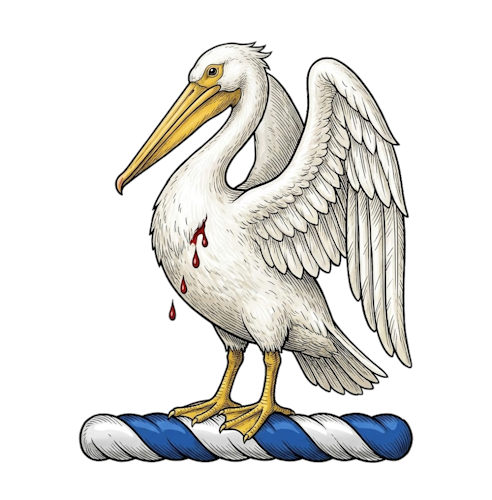
- Aquilion (Yorkshire)
- Arthur (Essex)
- Borthwick (Muirhouse)
- Bromhead (Ireland)
- Buxton (Tibenham, Norfolk; Derbyshire)
- Clavedon (England)
- Cuillan (Carbryl)
- Goldesburgh (Goldesburgh, Yorkshire; Cheping-Onger, Essex)
- Hume (England)
- Jegan (England)
- Kel (England)
- Lechmere (Hanley)
- Leechman (Scotland)
- Leeshman (Scotland)
- Linlithgow
- Nash
- O’Cuilean (Carbry, Ireland)
- O’Meard (Ireland)
- Pell (England)
- Peterson (Scotland)
- Peyrse (Northwold, Norfolk)
- Retton (England)
- Rising (England) A
- Throughston (Throughston, Worcestershire)
- Weatherhead (England)
Symbolism of the Crest Pelican Vulning: The pelican is one of the most powerful symbols in heraldry, representing self-sacrifice, charity, and parental love. When depicted “vulning” (wounding herself) or “in her piety” (feeding her young with her own blood), it serves as a profound religious emblem of Christ’s sacrifice and the Eucharist. It signifies a person who is willing to give everything for their family, country, or faith, embodying the highest virtues of devotion and benevolence.
General Symbolic Meaning The image of the pelican has been revered since antiquity and was adopted early on by Christian theology. In a secular heraldic context, it suggests a lineage known for its care of dependents and readiness to sacrifice personal well-being for the greater good. It is a noble crest that speaks to a legacy of protecting and nurturing others, often associated with those who held positions of responsibility or guardianship.