The crest on Plate 10, Image 4 (Pl. 10. cr. 4.) is described generally as a leopard’s head and neck (or simply a leopard’s head), often differing in tincture (color) depending on the specific family.
Surnames associated with this crest: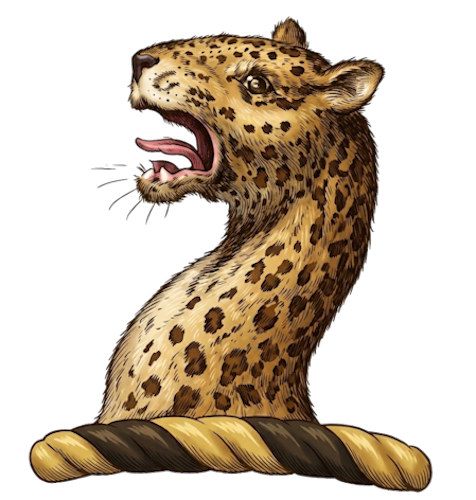
- Barbon (England)
- Barbon (London)
- Braine (Gloucestershire)
- Charleton (Shrewsbury)
- Charlton (Shrewsbury)
- Covert (Sussex)
- Houby (England)
- Jerveis (Worcester)
- Jerves (Hampshire)
- Kymer (Dorsetshire)
- Leversedge (Cheshire)
- Little (Meikledale)
- May (England)
- Michael (Berkshire)
- Michell (Berkshire)
- Mylbourne
- Paul (Scotland)
- Pickering (Nottinghamshire)
- Price (Buckinghamshire)
- Touke (Worcestershire)
- Warwick (England)
- Wilsford (Kent)
- Wilsford (Kent)
Symbolism of the Crest
Leopard’s Head: In heraldry, the leopard is often synonymous with the lion, particularly in early blazonry. It is a symbol of valiant and hardy warriors who enterprise hazardous things by force and courage. The head specifically represents the intellect and alertness of the beast, signifying a lineage that is not only brave but politically astute and watchful. When depicted “proper,” it emphasizes the natural strength of the animal.
General Symbolic Meanings
The leopard’s head is a powerful totem of protection and vigilance. It suggests a family history rooted in military service or guardianship, indicating ancestors who were fierce in defense of their rights and kin. The varied colors associated with different families (Gold/Or for generosity, Red/Gules for military strength, Blue/Azure for loyalty) add specific nuances to the general theme of a brave and watchful warrior spirit.