The crest on Plate 8, Crest 12 (Pl. 8. cr. 12.) is described as a bugle-horn (or hunting horn), usually stringed and garnished.
Surnames: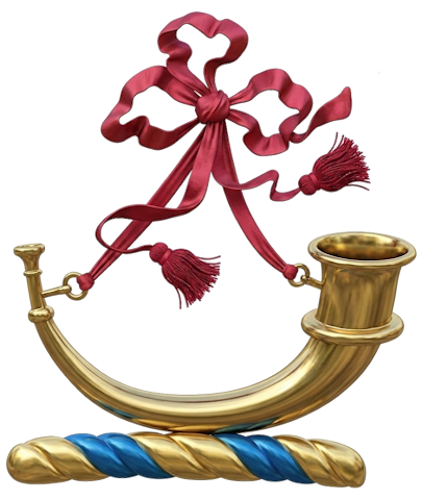
- Agard (Lancashire)
- Bagshaw (South Okenden, Essex)
- Bilson (Hampshire)
- Curl (Scotland)
- Done (England)
- Duncan (Mary-le-bone, Bart.)
- Forrester (Corstorphin)
- Goatham (England)
- Horn (Scotland)
- Horne (Westerhall)
- Hunt (Aston, Derbyshire)
- Hunter (Polmood)
- Hunter (Blackness)
- Hunter (Balskelly)
- Logan (Buncastle)
- Lothian (Edinburgh)
- Pierie (Scotland)
- Powrie (Of Woodcocksholme, Scotland)
- Pourie (Of Woodcocksholm, Linlithgowshire, Scotland)
- Povey (England)
- Purie (Of Woodcocksholm, Linlithgowshire, Scotland)
- Sclater (England)
- Waith (England)
- Wayte (Of Southampton, England)
- Whetstone (England)
Symbolism of the Crest
Bugle Horn (or Hunting Horn): The horn is a classic symbol of the chase and high pursuits, indicating a person of spirit who enjoys noble sport. Historically, it also possesses a martial significance, representing the call to rally troops for battle or the authority to summon followers to action. When depicted “stringed,” it suggests readiness for use.
General Symbolic Meaning
The image of the horn suggests a lineage connected to the ancient forests and the rights of the hunt, which were often privileges of high standing. It implies a family character defined by alertness, a readiness to gather for a common cause, and a connection to the outdoors, whether for provision or protection.