The crest on Plate 7, Image 11 (Pl. 7. cr. 11.) is described as a buck’s (or stag’s) head cabossed (full-faced, with no neck visible), often described with specific tinctures (colors) depending on the family.
Surnames: 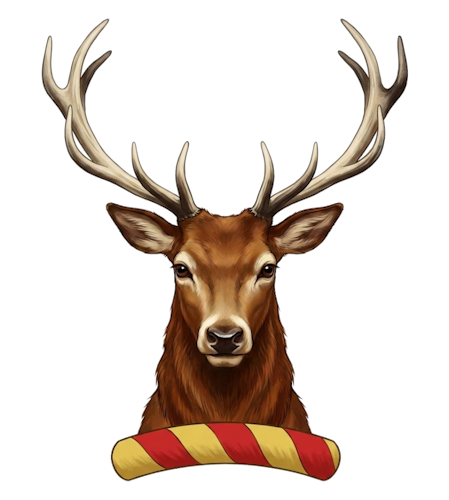
- Anne (Trickley, Yorkshire)
- Aveneyle (England)
- Bipleam (England)
- Bucknall (England)
- Calder (Lyneger)
- Clare (Dabiton, Worcestershire)
- Crozier (England)
- Doyley (Shotsham, Norfolk)
- Friend (England)
- Griffith (Ap, England)
- Hay (Edinburgh)
- Lacy (Beverley, Yorkshire)
- M’Kenzie (Edinburgh)
- Matrevers (England)
- Nisbet (England)
- Park (Scotland)
- Penman (England)
- Poole (England)
- Poole (Devonshire)
- Poole (Sapperton, Gloucestershire)
- Poole (Oakley, Wiltshire)
- Pount (Scotland)
- Raynsford (England)
- Skyrme (England)
- Steventon (Dodhill, Shropshire)
- Sulyard (Wetherden, Suffolk)
- Trye (France)
- Trye (Hardwick, Gloucestershire)
- Windle (England)
- Winyard (England)
- Worhead (England)
Symbolism Stag / Buck: The stag is a symbol of peace and harmony, representing one who will not fight unless provoked, but who fights with great strength when necessary. It is also associated with purity, fleetness of foot, and longevity. Cabossed: This heraldic term means the head is set full-faced with no neck visible; this specific position often denotes a hunter or someone with rights to the chase, signifying a connection to the land and nobility. Attires (Antlers): The antlers represent strength and fortitude.
General Symbolic Meanings The stag’s head cabossed is a classic heraldic image that suggests a lineage deeply rooted in the land, often associated with forestry or hunting rights. It implies a family character that is watchful and alert (like the stag at gaze) but maintains a peaceful demeanor until defense is required. It represents a balance between nature, strength, and nobility.