The crest on Plate 5, Image 4 (Pl. 5. cr. 4.) is described as a hawk or falcon, usually depicted “close” (perched with wings folded), often proper (natural colors), beaked and legged gold (or). Note: Some entries in the source text assign a stork or crane’s head to this plate number; these are noted in brackets.
Surnames: 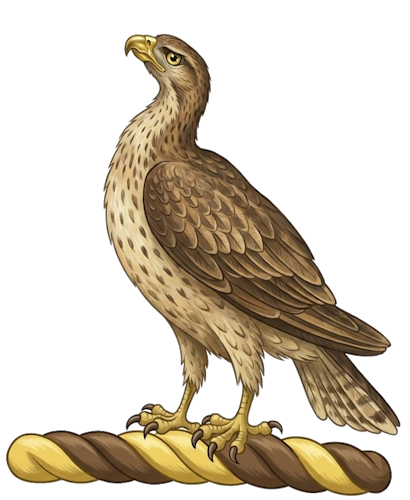
- Allerton (Lancashire)
- Atherton (Lancashire)
- Belby (England)
- Blagrave (England)
- Boscawen (Cornwall)
- Bowes (England)
- Fate (Scotland)
- Fythey (Arbroath)
- Graham (Scotland)
- Hady (England)
- Hay (Earl of Errol)
- Hay (Ballinkeele, Wexford)
- Knox (Ranfurleigh)
- Lacy (England)
- Paton (Kinaldy)
- Ralston (Scotland)
- Ridgeway (Devonshire)
- Rudhall (England)
- Rutall (England)
- Rythe (England)
- Williams (Devonshire)
Symbolism of the Crest Hawk / Falcon: The falcon is a widely recognized symbol of one who does not rest until they have achieved their objective, signifying eagerness, keen vision, and hot pursuit. Close / Perched: When the bird is depicted “close” (wings folded), it suggests a state of repose, dignity, and readiness, indicating latent power and speed held in reserve. Belled: If the bird is depicted with bells on its legs (jessed and belled), it signifies a bird trained for the hunt, historically representing high station, nobility, and aristocracy, as falconry was a sport reserved for the upper classes.
General Symbolic Meanings The presence of a bird of prey in a crest generally implies a lineage associated with bold action, authority, and a readiness to strike when necessary. The imagery suggests an individual or family that values alertness and quick reflexes, yet maintains a composed and dignified exterior. It speaks of a heritage where sport, specifically the noble art of falconry, played a role in daily life or social standing.