The crest on Plate 4, Image 7 (Pl. 4. cr. 7.) is described as a camel’s head, couped (sometimes specified as erased or having a distinct neck), often proper, sable, or argent.
Surnames: 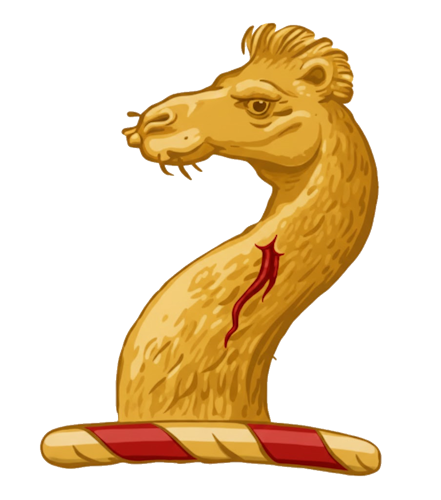
- Abberbury (Oxfordshire)
- Bradford (England)
- Burgis (England)
- Butter (England)
- Camel (England)
- Carron (Scotland)
- Clynch (England)
- Columball (England)
- Crow (Barsley, Kent)
- Edmeston (Scotland)
- Edmiston (Scotland)
- Edmistoun (That Ilk)
- Edmieton (That Ilk)
- Edsatour (That Ilk)
- Emmeloun (That Ilk)
- Fullarton (Craighall)
- Kahi (England)
- Lockwood (England)
- Paley (England)
- Pillerton (Scotland)
- Stother (England)
- Stutvile (England)
- Tivray (Scotland)
- Wheeler (England)
- Woodlume (England)
- Woodthorpe (England)
Symbolism of the Crest Camel / Camel’s Head: The camel is a traditional symbol of patience, endurance, and temperance. It signifies a person or family willing to bear heavy burdens with fortitude and perseverance. Historically, it can also indicate a connection to the East, suggesting an ancestor who may have traveled extensively, engaged in long-distance trade, or participated in the Crusades. Couped: Indicates the head is cut cleanly at the neck, a standard method of heraldic display implying no dishonor.
General Symbolic Meanings The presence of the camel in British heraldry is a distinct nod to resilience and the ability to thrive in difficult environments. It suggests a lineage that values steady progress, reliability, and the strength to persist through long and arduous undertakings without complaint.