The crest on Plate 3, Image 10 (Pl. 3. cr. 10.) is described primarily as an eagle’s head couped (cut smoothly at the neck), though some variations (like the heron) share this plate reference.
Surnames: 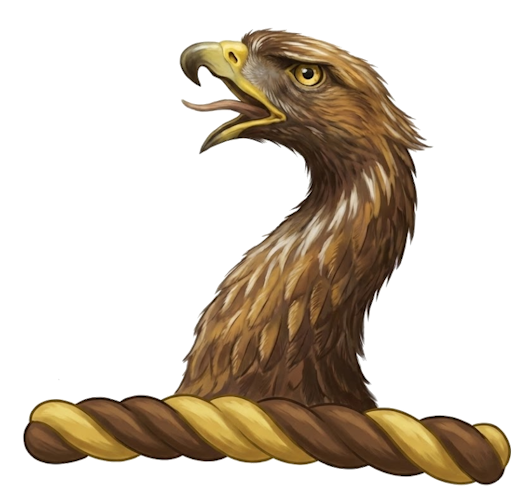
- Banks (Yorkshire, England)
- Bruce (Newton)
- Campbell (Fairfield)
- Davie (Aberdeen, Scotland)
- Dive (England)
- Divie (Scotland)
- Elingham (England)
- Golofer (England)
- Golston (England)
- Hale (England)
- Kyng (England)
- Meer (Sherborn, Dorsetshire, England)
- Rigges (England)
- Roos (England)
- Sidserf (Collegehead, Scotland)
- Sydserfe (College-Head, Scotland)
- Whishaw (England)
Symbolism of the Crest
Eagle’s Head: The eagle is generally regarded as the king of birds and is a symbol of power, authority, and keen vision. The head specifically represents the intellect and quick-wittedness of the bearer, as well as a noble nature that is quick to comprehend and act. Couped: This term signifies that the head is cut off smoothly in a straight line (as opposed to “erased” or jagged), which in heraldry is simply a mode of display but implies a clean, deliberate distinctness. Mouth Embrued: In the case of the surname Meer, “embrued” means bloody or having drops of blood, often symbolizing victory in battle or a readiness to fight fiercely for one’s kin or country.
General Symbolic Meaning
The eagle’s head is a emblem of perspicacity, courage, and strength of mind. It suggests a family or individual who values foresight and has the ability to rise above mundane difficulties. By focusing on the head rather than the whole bird, the symbol emphasizes the mental and spiritual attributes of the eagle—its sharp gaze towards the sun and its commanding presence—indicating a lineage associated with leadership, clear judgment, and high ambitions.