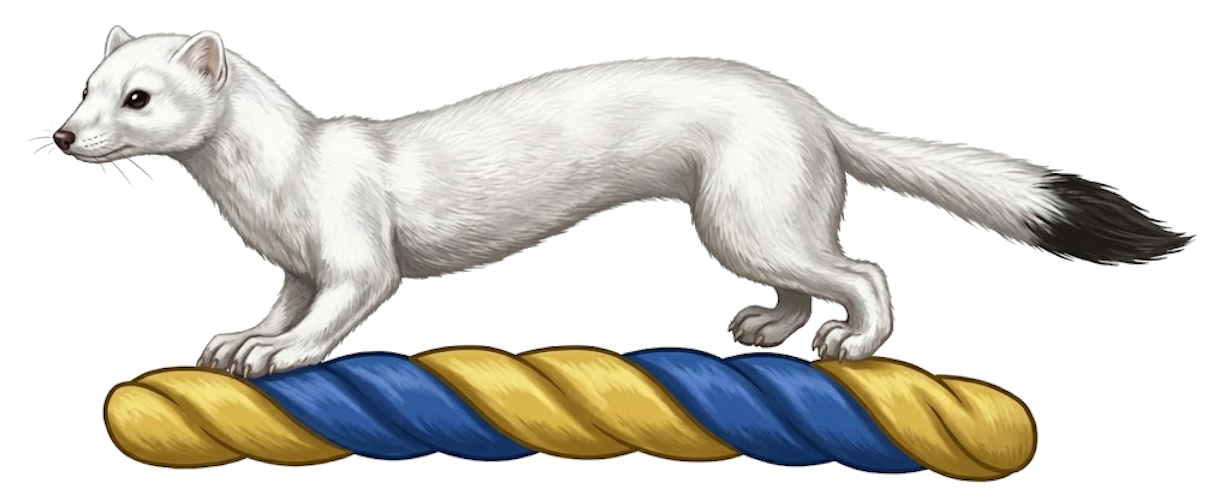
The crest on Plate 3, Image 2 (Pl. 3. cr. 2.) is described primarily as an ermine (or martin) passant, often proper or argent.
Here are the surnames associated with this crest:
- Blayney (Kensham)
- Chawner (England)
- Crawford (Viscount Garnock)
- Crawford (Kilbirney, Renfrewshire)
- Keith (Craig)
- Keith (Knight of the Bath)
- Lewis (Canterbury)
- M’Culloch (Baronet of Myrtoun)
- Martin (Long Melford, Suffolk)
- Robe (Scotland)
- Robe (London, England)
- Stanton (England)
- Watson (Newport, Shropshire)
- White (England)
Symbolism of the Crest
Ermine (or Martin) Passant: The ermine is a small animal highly valued for its snow-white fur, traditionally used to line the robes of royalty and judges. In heraldry, it is a powerful symbol of purity, dignity, and unsullied honor. This symbolism stems from the medieval legend that an ermine would rather die or allow itself to be captured than soil its pristine coat in mud. Therefore, it signifies a person of integrity and high station who values their reputation and conscience above life itself. Passant: This term indicates the animal is depicted walking, representing steady progress and continuity.
General Symbolic Meaning
The presence of the ermine in a family crest suggests a lineage that places the highest value on moral rectitude and the maintenance of a spotless character. It implies a nobility of spirit that refuses to be corrupted by external circumstances or temptations. When associated with a specific color or variation (like “vulned” or wounded), it may suggest maintaining one’s honor even through suffering or sacrifice.