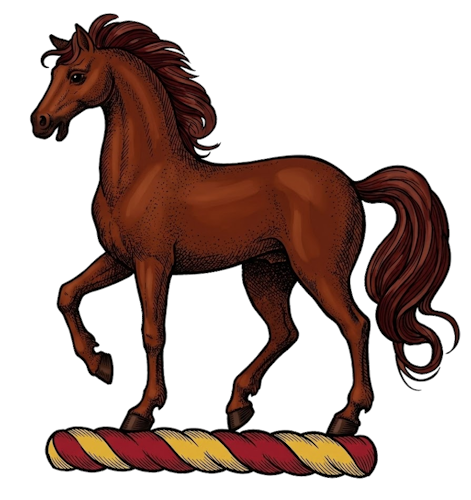
The crest on Plate 2, Image 12 (Pl. 2. cr. 12.) is described as a horse (or colt, or nag) passant (walking) or trotting, typically depicted saddled and bridled or free, often argent (silver) or proper.
Surnames Associated with this Crest:
- Bathurst (England)
- Cochran (England)
- Cochran (Kilmaronock)
- Cochran (Ochiltree)
- Cochran (Earl of Dundonald)
- Cochran (Waterside)
- Colt (Suffolk) [Described as A colt passant]
- Cradock (England)
- East (Riding, Buckinghamshire)
- East (Hall-place, Berkshire)
- Jeys (England)
- Killach (Scotland)
- Kiribrid (England)
- M’Culloch (Apliton)
- Plunket (England)
- Plunket (Earl of Fingal)
- Plunket (Lord Louth)
- Plunkett (Louth)
- See (Scotland)
- Trayton (England)
- Treton (Lewes, Sussex)
- Trotter (Dreghorn)
- Trotter (Eddram-Merse)
- Trotter (Catchitraw)
- Whitacre (Westbury, Wiltshire)
- Whittaker (Wiltshire)
- Whittaker (Shafton, Dorsetshire)
Symbolism of the Crest Horse: The horse is a highly regarded symbol in heraldry, representing readiness for king and country, speed, intellect, and virility. It signifies a spirited nature and high-mettled action. Passant / Trotting: This posture indicates a state of movement and progression, suggesting a family that is active, forward-thinking, and steady in its pursuits. Bridled / Saddled: When the horse is depicted as furnished (saddled and bridled), it signifies readiness for immediate service, discipline, and obedience to duty.
General Symbolic Meanings The horse is traditionally emblematic of war and conflict, but also of high spirit and freedom. A horse depicted “passant” (walking) or “trotting” suggests a disciplined energy—power under control. It implies that the bearer is ready for action but proceeds with dignity, nobility, and purpose rather than reckless haste.