The crest on Plate 11, Image 11 (Pl. 11. cr. 11.) is described as a stork’s, heron’s, or crane’s head erased, holding in its beak an eel, snake, or fish.
Surname: 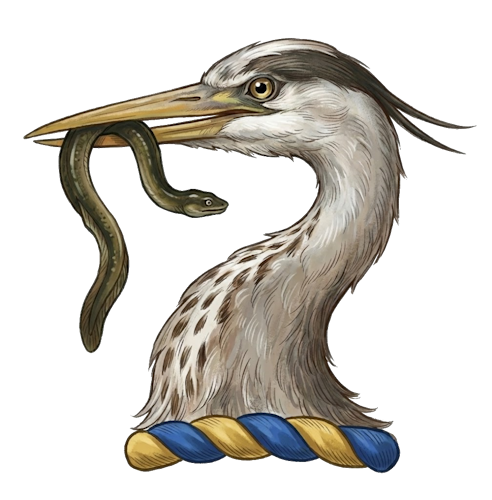
- Boughton (England)
- Brisbane (Brisbane)
- Brisbane (Bishopton)
- Brisbane (Milton)
- Brisbon (Scotland)
- Broughton (England)
- Mercer (London)
- Mercer (Of Aldie)
- Smith (Kedcliff, England)
- Starkey (Derbyshire, England)
- Starkey (Stretton, Cheshire, England)
- Starkey (Oulton, Cheshire, England)
- Starkey (Wenbury, Cheshire, England)
Symbolism Stork / Heron / Crane: These aquatic birds are traditional symbols of filial duty, gratitude, and piety, stemming from the legend that they care for their elderly parents. They also represent a contemplative life and vigilance. Eel / Snake / Fish: The creature held in the beak represents provision, resourcefulness, and the ability to seize opportunities. If interpreted as a snake, it signifies wisdom or the triumph over a venomous adversary.
General Symbolic Meanings The imagery of a bird of the marsh devouring an eel or snake suggests a lineage that is watchful and capable of overcoming slippery or dangerous challenges. It implies a readiness to turn difficulties into sustenance or victory, combining the virtues of patience (waiting for the catch) with decisive action.