The crest on Plate 10, Image 3 (Pl. 10. cr. 3.) is described as an ostrich, usually proper or argent, holding in its beak either a key or a horse-shoe.
surnames: 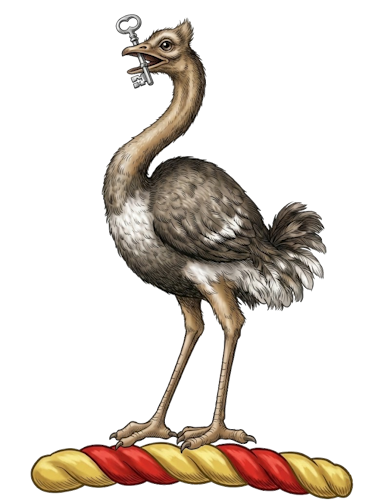
- Crawfurd (Earl of Crawford)
- Dickman (England)
- Lindesay (Leith)
- Lindesay (Wormiston, Fifeshire)
- Lindsay (Earl of Crawfurd)
- Lyndsey (England)
- Ray (Rawleigh, Suffolk, England)
- Redpath (Scotland)
- Wyatt (Boxley, Kent, England)
- Wyatt (Sherwell, Devonshire, England)
Symbolism Ostrich: In heraldry, the ostrich is often a symbol of willing obedience and serenity, but historically, it was most famous for its legendary (though mythical) ability to digest iron and stones. This trait made it a symbol of tough endurance and the ability to withstand the hard realities of life. Key / Horse-shoe: The object held in the beak—often a key or a horseshoe—directly references this iron-digesting capability. The Key can also symbolize guardianship, dominion, stewardship, and knowledge, while the Horse-shoe is a classic emblem of good luck and protection against evil.
General Symbolic Meaning The image suggests a family lineage characterized by resilience and the ability to thrive under harsh conditions. The ostrich digesting iron implies a constitution of fortitude to endure hardship without complaint (as seen in the Crawford motto “Endure Furth”). Combined with the key, it suggests a trustworthy guardian who endures difficult trials to protect what is valuable, or, in the case of the horseshoe, a family favored by fortune through their endurance.