The crest on Plate 7, Image 8 (Pl. 7. cr. 8.) is described as a stork (or crane) standing on a mount (or hill), holding in its dexter foot an escallop shell or a stone (often referred to as a “stork in its vigilance”).
Surnames Associated with This Crest: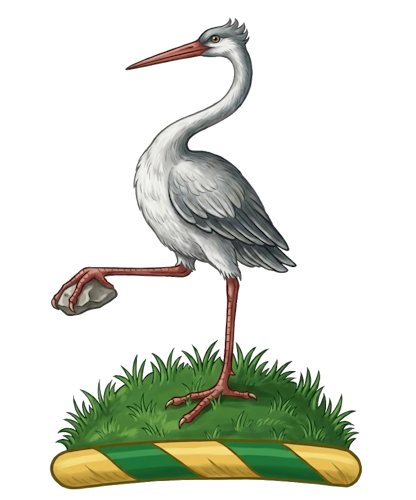
- Crewse (Cruse, Morchard, Devonshire)
- Cruse (Cruse, Morehard, Devonshire)
- Hall (England)
- Hall (Dunglass, Bart.)
- Harris (Scotland)
- Heris (England)
Symbolism of the Crest Stork / Crane: These birds are emblems of filial piety, gratitude, and close parental bonds, often associated with the idea of caring for one’s parents in old age. When depicted holding a Stone in its claw, it represents Vigilance; the legend states that if the crane falls asleep, the stone will drop and waken it, symbolizing an alert guardian. The Escallop Shell is a classic symbol of pilgrimage, travel to distant lands, or naval service, signifying one who has made long journeys or remained faithful. The Mount represents a solid foundation, firmness, and constancy. The Burning Mount (associated with M’Kenzie) signifies potential danger survived, or a beacon of warning and guidance.
General Symbolic Meaning This crest embodies the virtues of watchful guardianship and dutiful service. The combination of the vigilant bird and the mount suggests a family lineage grounded in steadfastness and readiness, while the inclusion of the shell or stone implies a history of travel, pilgrimage, or an unwavering commitment to duty, ensuring that the bearer is always prepared and alert against danger.