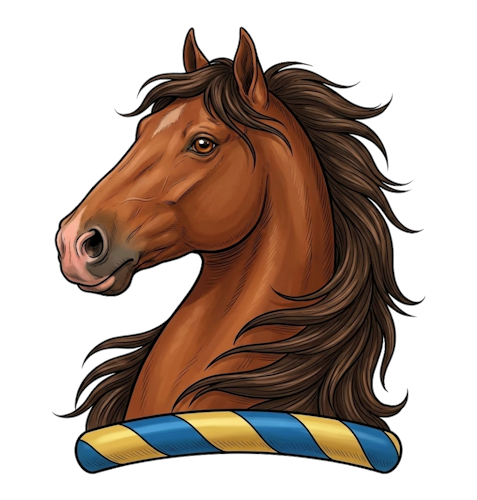
The crest on Plate 8, Image 10 (Pl. 8. cr. 10.) is described as a horse’s (or nag’s) head, typically couped or erased.
Surnames:
- Basset (Cornwall)
- Breres (Lancashire)
- Colt (Suffolk)
- Davies (Kilkenny)
- Deacon (England)
- De Courcy (Ireland)
- Dunbar (Scotland)
- Earle (Scotland)
- Fletcher (Cumberland)
- Gale (Dorsetshire)
- Gallay (Somersetshire)
- Galle (Dorsetshire)
- Galley (Somersetshire)
- Gallie (Scotland)
- Grady (Ireland)
- Greening (England)
- Hamilton (Scotland)
- Handby (England)
- Hewgell (England)
- Hoord (Shropshire)
- Horseburgh (Scotland)
- Horsefall (Yorkshire)
- Mallory (Yorkshire)
- Mallory (Northamptonshire)
- Monton (England)
- Ostle (England)
- Ostler
- Parker (England)
- Partridge (Suffolk)
- Percivall (Hampshire)
- Petley (England)
- Prescop (England)
- Prideaulx (England)
- Rotland (Surrey)
- Roushland (Surrey)
- Rutherford (Scotland)
- Rutland (Surrey)
- Stead (Scotland)
- Steerr (England)
- Tait (Scotland)
- Veist (Scotland)
- Weddell (Scotland)
- Yate (England)
Horse / Nag: The horse is a universal symbol of readiness for action, speed, intellect, and virility. It represents a willingness to serve one’s king and country with agility and strength. Head (Couped or Erased): Displaying the head alone concentrates the symbolism on the intellect and spirit of the animal. Stag / Hind (Variations): In the instances where this crest appears as a stag or hind (e.g., Breres, Handby), it symbolizes peace, harmony, and a person who will not fight unless provoked.
This crest generally signifies a lineage characterized by readiness, loyalty, and spirited action. The primary image of the horse suggests ancestors who may have been involved in cavalry service or were noted for their dispatch and energy in affairs. The variations including the stag suggest a peaceful nature that is nevertheless ready to defend its ground, while the imagery of trampling a serpent suggests a moral victory over adversity.